

Muscle Rigidity: Causes, Symptoms, Prevention, Diagnosis & Treatment
Imagine trying to move your body but feeling that your muscles are unusually tight, heavy, or difficult to relax. This feeling is known as muscle rigidity. Unlike normal soreness after exercise, rigidity can create continuous resistance during movement and may affect walking, bending, stretching, or other daily activities. It can be temporary after physical strain or prolonged inactivity, but persistent stiffness may sometimes be linked to an underlying medical condition.
Muscle rigidity can affect different parts of the body, including the neck, shoulders, back, arms, legs, and joints. Mild discomfort may sometimes be managed with rest, gentle movement, stretching, and massage. Some people also use topical products such as pain oil or joint pain oil for temporary comfort. However, persistent or unexplained stiffness should be evaluated by a healthcare professional rather than managed only with topical products.
What is Muscle Rigidity?
Muscle rigidity refers to unusual stiffness or tightness in the muscles that makes them difficult to relax. Normally, muscles contract and relax smoothly to produce movement. With rigidity, muscles may remain tense and resist movement, making simple activities such as walking, bending, reaching, or turning uncomfortable. The severity can range from mild tightness to significant restriction of movement.
Rigidity can develop after intense exercise, prolonged sitting, poor posture, muscle strain, or injury. It can also occur with certain neurological conditions, including Parkinson’s disease. People experiencing temporary muscular discomfort may consider oil for muscle pain, pain cure oil, or pain killer oil during a gentle massage routine. These products may provide a soothing sensation, but they do not determine the underlying cause of rigidity. If stiffness continues or becomes worse, medical assessment is important.
What Causes Muscle Rigidity?
There are several possible causes of muscle rigidity, ranging from everyday physical strain to neurological conditions. Heavy exercise, repetitive movements, sudden increases in workout intensity, prolonged inactivity, poor posture, and inadequate recovery can make muscles tight. Dehydration and changes in electrolytes such as calcium or potassium may also affect normal muscle function. An injury can cause surrounding muscles to become tense as the body attempts to protect the affected area.
Neurological disorders are another important cause. Parkinson’s disease is commonly associated with rigidity, while other conditions affecting the brain or nervous system may also interfere with normal muscle relaxation. People experiencing leg discomfort may search for oil for leg pain, while those with joint or mobility-related discomfort may look for pain oil. Topical products may be used for supportive massage, but persistent stiffness, sudden weakness, numbness, or severe pain requires proper medical evaluation.
What are the Symptoms of Muscle Rigidity?
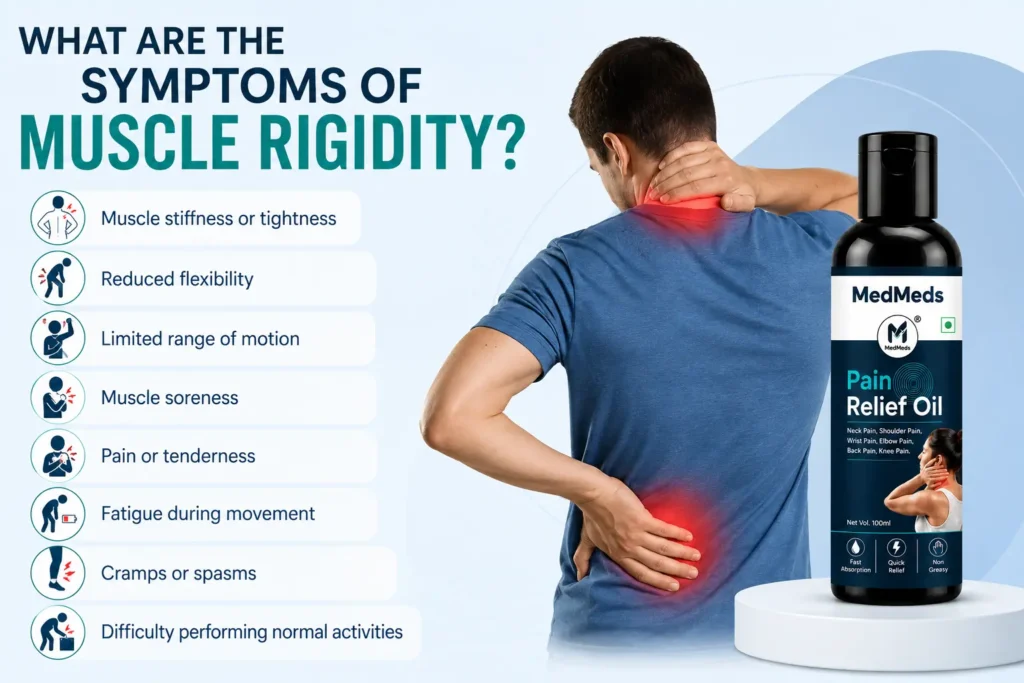
The main symptom of muscle rigidity is unusual tightness that creates resistance during movement. The affected muscles may feel tense even when you are resting. Some people notice that their movements become slower or less flexible, while others experience discomfort when trying to stretch or move the affected area. Rigidity may be present continuously or become more noticeable after sitting, sleeping, exercising, or performing repetitive activities.
Common symptoms can include:
- Muscle stiffness or tightness
- Reduced flexibility
- Limited range of motion
- Muscle soreness
- Pain or tenderness
- Fatigue during movement
- Cramps or spasms
- Difficulty performing normal activities
People with muscular or joint discomfort may search for body pain relief oil best pain relief oil, or pain relief massage oil for temporary massage comfort. However, these products should not be used to mask serious symptoms. Rigidity accompanied by tremors, significant weakness, loss of sensation, fever, confusion, or difficulty walking should be assessed by a healthcare professional.
How Can Muscle Stiffness Be Prevented?
Some forms of muscle stiffness can be reduced by maintaining regular movement and giving the body enough time to recover. Warming up before exercise, gradually increasing workout intensity, stretching gently, and avoiding prolonged periods in one position can help support flexibility. Good posture is also important, particularly for people who spend several hours working at a desk. Adequate hydration, balanced nutrition, sufficient sleep, and regular physical activity can further support normal muscle function.
Useful habits include:
- Warm up before strenuous exercise.
- Stretch gently after physical activity.
- Take regular breaks from prolonged sitting.
- Stay adequately hydrated.
- Maintain good posture.
- Increase exercise intensity gradually.
- Allow sufficient recovery after workouts.
For occasional back discomfort, oil for back pain massage may be used as part of a gentle massage routine. Regular physical activity is also recommended by the World Health Organization for maintaining overall health and physical function.
WHO Physical Activity Recommendations
How is Muscle Rigidity Diagnosed?
Diagnosing muscle rigidity involves finding out why the muscles are becoming stiff rather than simply confirming that stiffness exists. A healthcare professional may ask when symptoms began, which areas are affected, whether there was an injury, and whether stiffness changes with exercise or rest. They may also ask about medications, previous health problems, weakness, tremors, numbness, balance changes, and other symptoms.
During a physical examination, muscle tone, strength, reflexes, coordination, balance, flexibility, and range of motion may be assessed. Depending on the suspected cause, blood tests, imaging studies, or neurological tests may be recommended. People searching for the best pain relief oil in india should understand that a topical product cannot diagnose the cause of muscle rigidity. Similarly, choosing the best joint pain relief oil in india does not replace medical assessment when joint stiffness is persistent, severe, or associated with swelling or reduced movement.
How is Muscle Rigidity Treated?
Treatment depends on the underlying cause, severity, and location of the rigidity. Mild stiffness caused by overuse or physical activity may improve with rest, gentle stretching, gradual movement, hydration, and appropriate recovery. Physiotherapy can also be helpful when stiffness affects flexibility, strength, balance, or everyday movement. When rigidity is caused by a neurological condition, treatment may include specific medicines and rehabilitation under medical supervision.
For temporary knee discomfort, some people search for the best oil for knee joint pain, best oil for knee pain, or best knee pain relief oil for massage. Others may consider joint pain relief oil, knee pain relief oil, or a herbal pain relief oil for topical comfort. People experiencing muscular discomfort may also look for muscle pain relief oil. These products may make massage more comfortable, but they should not be considered a cure for an underlying medical condition.
Other Massage Options for Pain and Stiffness
Topical massage products are available in many formulations and may contain herbal extracts, essential oils, warming ingredients, cooling ingredients, or other topical components. Someone looking for back pain relief oil may use it during gentle back massage, while people experiencing general discomfort may search for best body massage oil for pain relief or body massage oil for pain relief. The suitability of any product depends on its ingredients, intended use, and individual skin sensitivity.
Other commonly searched options include massage oil for pain massage oil for joint pain, and muscle relaxant oil. A person with a stiff knee joint may also consider massage for temporary comfort, but persistent knee pain, swelling, locking, instability, or difficulty bearing weight should be medically assessed. Topical oils should always be used according to their label directions and stopped if irritation or an allergic reaction develops.
When Should You See a Doctor?
Occasional stiffness after exercise, prolonged sitting, or physical work may improve with rest and gentle movement. However, medical advice is recommended when muscle rigidity lasts for a long time, repeatedly returns, becomes progressively worse, or interferes with normal activities. A healthcare professional can determine whether the problem is related to muscles, joints, nerves, injury, medication, or another condition.
Prompt medical attention is particularly important when stiffness occurs with sudden weakness, severe pain, numbness, difficulty walking, significant swelling, high fever, confusion, or a serious injury. Early evaluation can help identify the cause and ensure that appropriate treatment is started instead of relying only on temporary symptom relief.
Conclusion
Muscle rigidity can develop because of physical strain, prolonged inactivity, poor posture, dehydration, injury, or certain medical conditions. While temporary stiffness may improve with simple self-care, persistent rigidity should not be ignored, particularly when it affects movement or occurs alongside other unusual symptoms.
Regular activity, stretching, hydration, good posture, adequate sleep, and proper recovery can support healthy muscle function. Massage and topical products may provide temporary comfort for some types of muscle and joint discomfort, but they should complement rather than replace appropriate medical care. If stiffness is persistent, severe, or accompanied by weakness, numbness, swelling, fever, or difficulty moving, consult a healthcare professional.
FAQ
Treatment depends on the cause. Gentle stretching, regular movement, adequate hydration, physiotherapy, and appropriate exercise may help some types of stiffness. Medical treatment may be necessary when rigidity is related to an underlying condition.
Rigidity generally causes sustained resistance when a muscle is moved, while spasticity is associated with increased muscle tone that can become more pronounced depending on how quickly the muscle is stretched.
Electrolyte disturbances involving minerals such as calcium, potassium, or magnesium can affect muscle function. However, muscle rigidity has many possible causes, so persistent symptoms should not automatically be attributed to a nutritional deficiency.
Two commonly described patterns are lead-pipe rigidity, where resistance remains relatively consistent throughout movement, and cogwheel rigidity, where movement feels interrupted or jerky.
Depending on the cause, regular movement, gentle stretching, appropriate exercise, hydration, physiotherapy, and heat therapy may help. If rigidity is persistent or associated with other symptoms, medical evaluation is recommended.
Medical Disclaimer
This article is intended for general informational and educational purposes only and should not be considered medical advice, diagnosis, or treatment. Muscle rigidity can have different causes, ranging from physical strain and prolonged inactivity to injuries or underlying neurological conditions. The information provided here is not a substitute for consultation with a qualified healthcare professional.
Topical pain-relief oils or massage products may provide temporary comfort for some types of muscle or joint discomfort, but they should not be considered a cure for an underlying medical condition. If muscle rigidity is persistent, severe, worsening, or accompanied by symptoms such as weakness, numbness, swelling, fever, confusion, severe pain, or difficulty walking, seek appropriate medical attention.
Always follow the instructions on any topical product label and discontinue use if irritation or an allergic reaction occurs.
MedMeds Health Content Team
The MedMeds Health Content Team creates educational content covering general wellness, muscle and joint comfort, physical activity, and healthy lifestyle practices. Content is prepared to provide readers with easy-to-understand information based on general health guidance and is intended to support informed discussions with healthcare professionals.
The information in this article has been written for educational purposes and should not replace personalized medical advice, diagnosis, or treatment from a qualified healthcare professional.