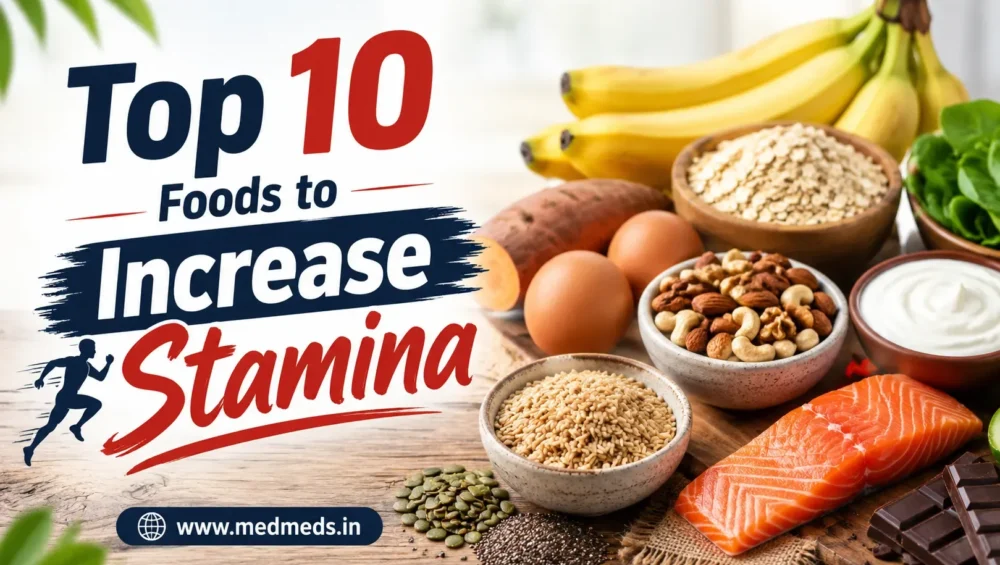
Top 10 Foods to Increase Stamina Naturally
Feeling tired during the day or running out of energy during physical activity can make everyday tasks feel harder. Your daily diet can play an important role in supporting energy and stamina. Foods that provide carbohydrates, protein, healthy fats, fiber, vitamins, and minerals can help support your body’s nutritional needs.
If you want to increase stamina naturally adding nutritious foods to your regular meals is a simple place to start. Instead of relying mainly on sugary snacks or energy drinks, choose whole foods that provide useful nutrients and lasting nourishment.
Here are 10 nutritious foods that can support energy, physical activity, and stamina as part of a balanced diet.
1. Bananas
Bananas are one of the easiest stamina building foods to include in your daily diet. They provide carbohydrates, potassium, vitamin B6, and fiber, making them a convenient choice for an active lifestyle.
Why Bananas Support Stamina
Carbohydrates are an important source of fuel for physical activity. Bananas provide naturally occurring carbohydrates that the body can use for energy.
They also contain potassium, an essential mineral involved in normal muscle and nerve function.
How to Eat Bananas
You can enjoy a banana:
- On its own as a snack
- With oats
- With Greek yogurt
- With peanut butter
- With almonds or walnuts
- With whole-grain toast
A banana can be a convenient option before physical activity or between meals.
2. Oats
Oats are among the most practical high energy foods for breakfast. They provide carbohydrates and fiber and can easily be combined with fruits, protein, nuts, and seeds.
Why Oats Support Stamina
The carbohydrates in oats provide fuel, while their fiber content can make a meal more filling. This makes oats a useful alternative to highly processed breakfast foods.
Adding protein and healthy fats can make an oat-based meal more balanced and satisfying.
How to Eat Oats
Try oats with:
- Banana or berries
- Greek yogurt
- Almonds or walnuts
- Chia seeds
- Dates
- Milk
For a nutritious breakfast, combine oats with fruit and a source of protein.
For more general guidance on building a balanced diet, you can also refer to the NHS guide to eating a balanced diet
3. Eggs
Eggs are a convenient source of high-quality protein and can easily be included in breakfast, lunch, or dinner. They are a practical food choice for people looking to support an active lifestyle.
Why Eggs Support Stamina
Protein helps maintain and repair body tissues, including muscles. Getting enough protein is an important part of a balanced diet, particularly for people who exercise regularly.
Eggs also provide several vitamins and minerals, including vitamin B12, which contributes to normal energy metabolism.
How to Eat Eggs
You can have eggs as:
- Boiled eggs
- Vegetable omelets
- Scrambled eggs
- Egg sandwiches
- Eggs with whole-grain toast
For a balanced meal, combine eggs with vegetables and a carbohydrate source.
4. Nuts and Seeds
Almonds, walnuts, peanuts, pumpkin seeds, sunflower seeds, and chia seeds are nutrient-dense foods. They provide healthy fats, protein, fiber, and various vitamins and minerals.
They can be useful energy supporting foods when eaten in appropriate portions.
Why Nuts and Seeds Support Energy
Healthy fats and protein can make snacks more satisfying, while their calories contribute to overall energy intake.
Nuts and seeds are also convenient because they require little or no preparation.
How to Eat Nuts and Seeds
Add a small portion to:
- Oatmeal
- Yogurt
- Smoothies
- Fruit bowls
- Salads
Because nuts and seeds are calorie-dense, a small handful can be enough for a snack.
5. Sweet Potatoes
Sweet potatoes are a nutritious source of carbohydrates, fiber, and beta-carotene. They can be a useful addition to meals for people looking for nutritious foods to increase energy levels.
Why Sweet Potatoes Support Stamina
Carbohydrates are an important source of fuel for physical activity. Sweet potatoes provide carbohydrates along with fiber and other nutrients.
They can also be combined with protein to create a more balanced meal.
How to Eat Sweet Potatoes
Try sweet potatoes:
- Baked
- Boiled
- Roasted
- Mashed
- Added to grain bowls
You can combine them with eggs, lentils, vegetables, fish, or chicken.
6. Greek Yogurt
Greek yogurt is a convenient source of protein and can be combined with fruits, oats, nuts, and seeds. Depending on the variety, it may also provide carbohydrates and other nutrients.
Why Greek Yogurt Supports Stamina
Protein can help make meals and snacks more satisfying. Combining Greek yogurt with carbohydrate-rich foods such as fruit or oats creates a balanced snack.
It is also convenient for people who want a quick food option with little preparation.
How to Eat Greek Yogurt
Try Greek yogurt with:
- Banana
- Berries
- Oats
- Nuts
- Chia seeds
- Dates
Choose plain or lower-added-sugar varieties when possible.
7. Brown Rice
Brown rice is a whole-grain carbohydrate that provides fiber along with several nutrients. It can be a useful staple for meals that provide regular fuel throughout the day.
Why Brown Rice Supports Stamina
Carbohydrates are an important source of fuel, particularly for people who are physically active. Brown rice provides carbohydrates while also contributing fiber to the meal.
Combining it with protein and vegetables can create a more balanced meal.
How to Eat Brown Rice
A simple meal could include:
Brown rice + dal + vegetables + yogurt
You can also combine brown rice with eggs, fish, chicken, beans, or other protein sources.
8. Dates
Dates are naturally sweet fruits containing carbohydrates, making them a convenient choice among foods for quick energy.
They are small, portable, and require no preparation, which makes them easy to include in a busy routine.
Why Dates Support Stamina
The carbohydrates in dates can provide readily available fuel. This makes them a convenient snack around physical activity.
However, dates are relatively concentrated in natural sugars and calories, so reasonable portions are important.
How to Eat Dates
You can:
- Eat them on their own
- Combine them with almonds
- Add them to oats
- Mix them into yogurt
- Blend them into smoothies
A few dates with a small portion of nuts can make a convenient snack.
9. Fatty Fish
Fatty fish such as salmon, sardines, and mackerel provide high-quality protein and healthy fats, including omega-3 fatty acids.
Why Fatty Fish Supports Stamina
Protein is important for maintaining and repairing muscle tissue. Healthy fats are also an important part of a balanced diet.
Including fish as part of a varied diet can therefore support overall nutrition and an active lifestyle.
How to Eat Fatty Fish
You can have fish:
- Grilled
- Baked
- Steamed
- With brown rice
- With vegetables
- In a salad
A meal combining fish, vegetables, and a carbohydrate source provides a variety of nutrients.
10. Spinach and Leafy Greens
Spinach, kale, mustard greens, and other leafy vegetables provide vitamins, minerals, fiber, and antioxidants.
Although leafy greens are not high-calorie foods, they are an important part of a nutritious diet.
Why Leafy Greens Support Stamina
Feeling energetic is not only about consuming calories. Your body also needs a range of vitamins and minerals to support normal body functions.
Including leafy greens regularly can contribute to an overall nutritious eating pattern.
How to Eat Leafy Greens
You can add leafy greens to:
- Omelets
- Dal
- Salads
- Soups
- Sandwiches
- Smoothies
Combining leafy greens with protein and carbohydrate sources can make a more complete meal.
Conclusion
The foods you choose every day can play an important role in supporting energy and stamina. Bananas, oats, eggs, nuts and seeds, sweet potatoes, Greek yogurt, brown rice, dates, fatty fish, and leafy greens each provide different nutrients that can contribute to a balanced diet.
If you want to increase stamina naturally, focus on including a variety of nutrient-rich foods in your regular meals rather than depending on quick energy fixes. A balanced diet can provide the carbohydrates, protein, healthy fats, vitamins, minerals, and fiber your body needs to support an active lifestyle.
Yes. Most of these foods can be included regularly as part of a varied and balanced diet. The appropriate amount depends on your individual nutritional needs and overall diet.
Yes. A vegetarian diet can provide the nutrients needed for energy and physical activity when it includes whole grains, legumes, dairy or suitable alternatives, nuts, seeds, fruits, and vegetables.
It can help to limit foods and drinks high in added sugar and low in nutritional value, such as sugary drinks, highly processed snacks, and excessive sweets.
Combining different food groups can create a more balanced meal. For example, oats with yogurt and fruit, brown rice with dal and vegetables, or eggs with whole-grain toast and vegetables can provide a wider range of nutrients.
Yes. Combining fruit with a small portion of nuts or seeds can provide carbohydrates along with protein, healthy fats, and other nutrients.
Many of these foods can fit into a balanced weight-management diet when portions are appropriate. Foods such as vegetables, fruits, oats, eggs, yogurt, whole grains, and fish can provide useful nutrients.
Homemade meals can make it easier to control ingredients, portion sizes, added sugar, salt, and cooking methods. Building meals around whole or minimally processed foods can support a nutritious eating pattern.
No. Different foods provide different nutrients. A varied diet is a better approach than relying on a single food.
Medical Disclaimer
This article is intended for general educational and informational purposes only. The foods discussed here can be part of a healthy, balanced diet, but they are not intended to diagnose, treat, or cure any medical condition.
Individual nutritional needs can vary based on age, health status, activity level, medications, and dietary requirements. If you have a medical condition, food allergy, or specific nutritional concern, speak with a qualified healthcare professional or registered dietitian before making significant changes to your diet.
If you experience persistent or unexplained tiredness, consult a healthcare professional rather than relying only on dietary changes.
About the Author
The MedMeds Health Editorial Team creates health and wellness content focused on nutrition, lifestyle, supplements, and general wellbeing. Content is prepared using reliable health and nutrition information and written in simple language to help readers make informed decisions.
Health information published on this website is intended for educational purposes and should not replace advice from a qualified healthcare professional.