
Free standard shipping for orders OVER RS: 999
Muscle Rigidity

Muscle Rigidity: Causes, Symptoms, Prevention, Diagnosis & Treatment

Imagine trying to move your body but feeling that your muscles are unusually tight, heavy, or difficult to relax. This feeling is known as muscle rigidity. Unlike normal soreness after exercise, rigidity can create continuous resistance during movement and may affect walking, bending, stretching, or other daily activities. It can be temporary after physical strain or prolonged inactivity, but persistent stiffness may sometimes be linked to an underlying medical condition.

Muscle rigidity can affect different parts of the body, including the neck, shoulders, back, arms, legs, and joints. Mild discomfort may sometimes be managed with rest, gentle movement, stretching, and massage. Some people also use topical products such as pain oil or joint pain oil for temporary comfort. However, persistent or unexplained stiffness should be evaluated by a healthcare professional rather than managed only with topical products.

What is Muscle Rigidity?

Muscle rigidity refers to unusual stiffness or tightness in the muscles that makes them difficult to relax. Normally, muscles contract and relax smoothly to produce movement. With rigidity, muscles may remain tense and resist movement, making simple activities such as walking, bending, reaching, or turning uncomfortable. The severity can range from mild tightness to significant restriction of movement.

Rigidity can develop after intense exercise, prolonged sitting, poor posture, muscle strain, or injury. It can also occur with certain neurological conditions, including Parkinson’s disease. People experiencing temporary muscular discomfort may consider oil for muscle pain, pain cure oil, or pain killer oil during a gentle massage routine. These products may provide a soothing sensation, but they do not determine the underlying cause of rigidity. If stiffness continues or becomes worse, medical assessment is important.

What Causes Muscle Rigidity?

There are several possible causes of muscle rigidity, ranging from everyday physical strain to neurological conditions. Heavy exercise, repetitive movements, sudden increases in workout intensity, prolonged inactivity, poor posture, and inadequate recovery can make muscles tight. Dehydration and changes in electrolytes such as calcium or potassium may also affect normal muscle function. An injury can cause surrounding muscles to become tense as the body attempts to protect the affected area.

Neurological disorders are another important cause. Parkinson’s disease is commonly associated with rigidity, while other conditions affecting the brain or nervous system may also interfere with normal muscle relaxation. People experiencing leg discomfort may search for oil for leg pain, while those with joint or mobility-related discomfort may look for pain oil. Topical products may be used for supportive massage, but persistent stiffness, sudden weakness, numbness, or severe pain requires proper medical evaluation.

What are the Symptoms of Muscle Rigidity?
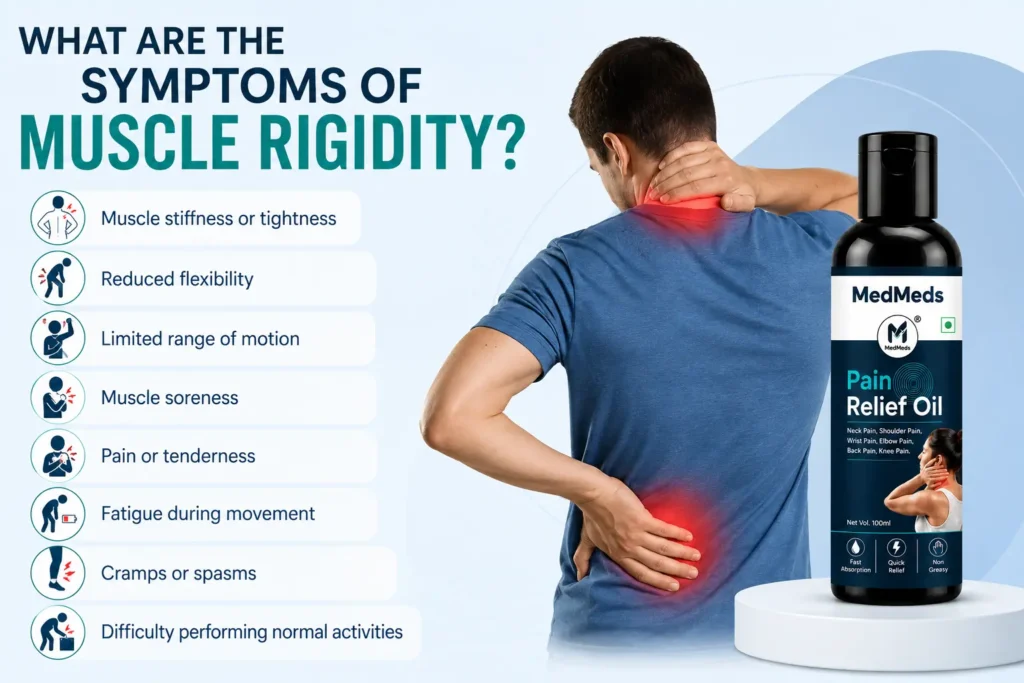
Muscle stiffness or tightness

The main symptom of muscle rigidity is unusual tightness that creates resistance during movement. The affected muscles may feel tense even when you are resting. Some people notice that their movements become slower or less flexible, while others experience discomfort when trying to stretch or move the affected area. Rigidity may be present continuously or become more noticeable after sitting, sleeping, exercising, or performing repetitive activities.

Common symptoms can include:

  • Muscle stiffness or tightness
  • Reduced flexibility
  • Limited range of motion
  • Muscle soreness
  • Pain or tenderness
  • Fatigue during movement
  • Cramps or spasms
  • Difficulty performing normal activities

People with muscular or joint discomfort may search for body pain relief oil best pain relief oil, or pain relief massage oil for temporary massage comfort. However, these products should not be used to mask serious symptoms. Rigidity accompanied by tremors, significant weakness, loss of sensation, fever, confusion, or difficulty walking should be assessed by a healthcare professional.

How Can Muscle Stiffness Be Prevented?

Some forms of muscle stiffness can be reduced by maintaining regular movement and giving the body enough time to recover. Warming up before exercise, gradually increasing workout intensity, stretching gently, and avoiding prolonged periods in one position can help support flexibility. Good posture is also important, particularly for people who spend several hours working at a desk. Adequate hydration, balanced nutrition, sufficient sleep, and regular physical activity can further support normal muscle function.

Useful habits include:

  • Warm up before strenuous exercise.
  • Stretch gently after physical activity.
  • Take regular breaks from prolonged sitting.
  • Stay adequately hydrated.
  • Maintain good posture.
  • Increase exercise intensity gradually.
  • Allow sufficient recovery after workouts.

For occasional back discomfort, oil for back pain massage may be used as part of a gentle massage routine. Regular physical activity is also recommended by the World Health Organization for maintaining overall health and physical function.

WHO Physical Activity Recommendations

How is Muscle Rigidity Diagnosed?

Diagnosing muscle rigidity involves finding out why the muscles are becoming stiff rather than simply confirming that stiffness exists. A healthcare professional may ask when symptoms began, which areas are affected, whether there was an injury, and whether stiffness changes with exercise or rest. They may also ask about medications, previous health problems, weakness, tremors, numbness, balance changes, and other symptoms.

During a physical examination, muscle tone, strength, reflexes, coordination, balance, flexibility, and range of motion may be assessed. Depending on the suspected cause, blood tests, imaging studies, or neurological tests may be recommended. People searching for the best pain relief oil in india should understand that a topical product cannot diagnose the cause of muscle rigidity. Similarly, choosing the best joint pain relief oil in india does not replace medical assessment when joint stiffness is persistent, severe, or associated with swelling or reduced movement.

How is Muscle Rigidity Treated?

Treatment depends on the underlying cause, severity, and location of the rigidity. Mild stiffness caused by overuse or physical activity may improve with rest, gentle stretching, gradual movement, hydration, and appropriate recovery. Physiotherapy can also be helpful when stiffness affects flexibility, strength, balance, or everyday movement. When rigidity is caused by a neurological condition, treatment may include specific medicines and rehabilitation under medical supervision.

For temporary knee discomfort, some people search for the best oil for knee joint pain, best oil for knee pain, or best knee pain relief oil for massage. Others may consider joint pain relief oil, knee pain relief oil, or a herbal pain relief oil for topical comfort. People experiencing muscular discomfort may also look for muscle pain relief oil. These products may make massage more comfortable, but they should not be considered a cure for an underlying medical condition.

Other Massage Options for Pain and Stiffness

Topical massage products are available in many formulations and may contain herbal extracts, essential oils, warming ingredients, cooling ingredients, or other topical components. Someone looking for back pain relief oil may use it during gentle back massage, while people experiencing general discomfort may search for best body massage oil for pain relief or body massage oil for pain relief. The suitability of any product depends on its ingredients, intended use, and individual skin sensitivity.

Other commonly searched options include massage oil for pain massage oil for joint pain, and muscle relaxant oil. A person with a stiff knee joint may also consider massage for temporary comfort, but persistent knee pain, swelling, locking, instability, or difficulty bearing weight should be medically assessed. Topical oils should always be used according to their label directions and stopped if irritation or an allergic reaction develops.

When Should You See a Doctor?

Occasional stiffness after exercise, prolonged sitting, or physical work may improve with rest and gentle movement. However, medical advice is recommended when muscle rigidity lasts for a long time, repeatedly returns, becomes progressively worse, or interferes with normal activities. A healthcare professional can determine whether the problem is related to muscles, joints, nerves, injury, medication, or another condition.

Prompt medical attention is particularly important when stiffness occurs with sudden weakness, severe pain, numbness, difficulty walking, significant swelling, high fever, confusion, or a serious injury. Early evaluation can help identify the cause and ensure that appropriate treatment is started instead of relying only on temporary symptom relief.

Conclusion

Muscle rigidity can develop because of physical strain, prolonged inactivity, poor posture, dehydration, injury, or certain medical conditions. While temporary stiffness may improve with simple self-care, persistent rigidity should not be ignored, particularly when it affects movement or occurs alongside other unusual symptoms.

Regular activity, stretching, hydration, good posture, adequate sleep, and proper recovery can support healthy muscle function. Massage and topical products may provide temporary comfort for some types of muscle and joint discomfort, but they should complement rather than replace appropriate medical care. If stiffness is persistent, severe, or accompanied by weakness, numbness, swelling, fever, or difficulty moving, consult a healthcare professional.

FAQ

Treatment depends on the cause. Gentle stretching, regular movement, adequate hydration, physiotherapy, and appropriate exercise may help some types of stiffness. Medical treatment may be necessary when rigidity is related to an underlying condition.

Rigidity generally causes sustained resistance when a muscle is moved, while spasticity is associated with increased muscle tone that can become more pronounced depending on how quickly the muscle is stretched.

Electrolyte disturbances involving minerals such as calcium, potassium, or magnesium can affect muscle function. However, muscle rigidity has many possible causes, so persistent symptoms should not automatically be attributed to a nutritional deficiency.

Two commonly described patterns are lead-pipe rigidity, where resistance remains relatively consistent throughout movement, and cogwheel rigidity, where movement feels interrupted or jerky.

Depending on the cause, regular movement, gentle stretching, appropriate exercise, hydration, physiotherapy, and heat therapy may help. If rigidity is persistent or associated with other symptoms, medical evaluation is recommended.

Medical Disclaimer

This article is intended for general informational and educational purposes only and should not be considered medical advice, diagnosis, or treatment. Muscle rigidity can have different causes, ranging from physical strain and prolonged inactivity to injuries or underlying neurological conditions. The information provided here is not a substitute for consultation with a qualified healthcare professional.

Topical pain-relief oils or massage products may provide temporary comfort for some types of muscle or joint discomfort, but they should not be considered a cure for an underlying medical condition. If muscle rigidity is persistent, severe, worsening, or accompanied by symptoms such as weakness, numbness, swelling, fever, confusion, severe pain, or difficulty walking, seek appropriate medical attention.

Always follow the instructions on any topical product label and discontinue use if irritation or an allergic reaction occurs.

MedMeds Health Content Team

The MedMeds Health Content Team creates educational content covering general wellness, muscle and joint comfort, physical activity, and healthy lifestyle practices. Content is prepared to provide readers with easy-to-understand information based on general health guidance and is intended to support informed discussions with healthcare professionals.

The information in this article has been written for educational purposes and should not replace personalized medical advice, diagnosis, or treatment from a qualified healthcare professional.
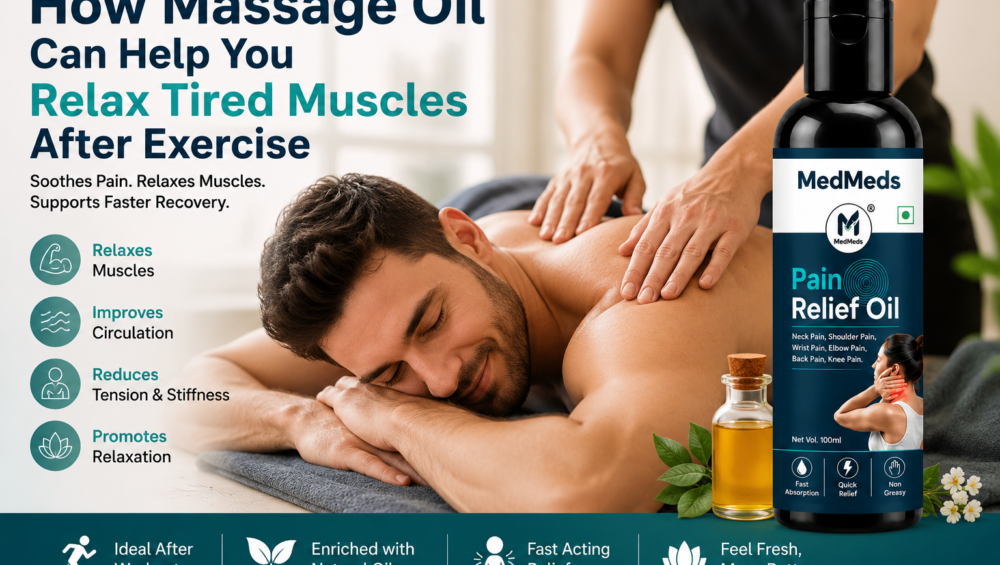
How Massage Oil Can Help You Relax Tired Muscles After Exercise

How Massage Oil Can Help You Relax Tired Muscles After Exercise

Exercise is an important part of a healthy lifestyle, but demanding workouts can leave your muscles feeling tired, tight, or uncomfortable. Using a suitable pain oil can be one simple way to include massage in your post-workout self-care routine.

After running, cycling, strength training, or playing sports, your body needs time to recover. A gentle massage with joint pain oil can be incorporated into a relaxing routine when your joints feel tired after physical activity.

Why Do Muscles Feel Tired After Exercise?

When you exercise, your muscles work harder than they normally do during everyday activities. For people experiencing temporary post-workout discomfort, knee pain oil may be considered as part of a gentle massage routine around the knee.

Muscle fatigue can occur after a challenging workout, especially when you increase the intensity or try a new exercise. Using an oil for muscle pain during a gentle massage can make the massage process smoother and more comfortable.

How Can Massage Oil Help After Exercise?

Massage allows you to spend a few minutes focusing on areas that feel tired after physical activity. An ortho pain oil can be used as a topical massage product, although persistent or severe pain should always be evaluated by a healthcare professional.

Massage oil can also reduce friction between your hands and skin, making gentle massage movements easier. An oil for leg pain can be useful for massaging tired legs after activities such as running, walking, or cycling.

Benefits of Massage After Exercise

A post-workout massage can become a relaxing transition between exercise and rest. Rather than looking for a guaranteed pain cure oil, focus on massage as one part of a broader recovery routine that includes rest, hydration, and appropriate nutrition.

Gentle massage may also provide a soothing sensation in tired muscles. Products marketed as pain killer oil should not be confused with medicines, and consumers should always check the product’s intended use and ingredients.

Massage for Tired Legs

Running, cycling, walking, and lower-body workouts can leave your legs feeling fatigued. Using an oil for back pain massage is more appropriate for the back area, while leg massage should focus on comfortable movements across the tired muscles.

When massaging your legs, start with a small amount of oil and use slow, gentle strokes. Choosing the best pain relief oil should involve checking its ingredients, intended use, and suitability for your individual needs.

Massage for Back and Shoulders

Your back and shoulders may feel tired after weight training, swimming, sports, or even long periods of sitting. A body pain relief oil can be incorporated into a general massage routine for areas that feel tired after daily activities.

Massage should always remain comfortable and should never involve excessive pressure. If you are searching for the best pain relief oil in India, consider the formulation and intended purpose instead of relying only on marketing claims.

Massage for Knees and Joints

The knees experience repeated movement during activities such as running, squats, lunges, and cycling. Someone searching for the best joint pain relief oil in India should understand that a topical massage oil is not a substitute for professional assessment of persistent joint problems.

For temporary tiredness around the knee, gentle massage may be included in a personal care routine. When choosing the best oil for knee joint pain, consider the product’s ingredients and directions for use.

Choosing an Oil for Muscle Massage

Different people choose massage oils for different purposes, including post-workout relaxation and everyday body care. If you’re searching for the best oil for knee pain, choose a product according to its intended use rather than assuming every massage oil is suitable for every condition.

A massage oil should spread comfortably over the skin and be appropriate for topical use. People looking for best knee pain relief oil should also pay attention to product instructions and discontinue use if skin irritation occurs.

Herbal Ingredients in Pain Relief Oils

Many people prefer topical massage oils that contain traditional herbal and aromatic ingredients as part of their regular self-care routine. A muscle pain relief oil may combine several oils, extracts, and cooling or warming ingredients that are traditionally used during massage to help relax tired muscles, ease feelings of stiffness, and provide a soothing massage experience.

Ingredients in MedMeds Pain Oil

MedMeds Pain Oil contains a blend of traditional oils and aromatic ingredients, including:

  • Mahavish Garbh Oil – Traditionally used in massage formulations to support relaxation and comfort in muscles and joints.
  • Iramedadi Oil – A traditional oil commonly used in topical massage routines and Ayurvedic-inspired preparations.
  • Narayana Oil – Traditionally associated with massage for muscular and joint comfort.
  • Tarprin Oil – Included as part of the oil blend to complement the overall topical massage experience.
  • Nilgiri Oil – Known for its refreshing and cooling aroma, it can provide a soothing sensation when massaged onto the skin.
  • Sat Ajwayan – A traditional aromatic ingredient often used in topical preparations for its warming and comforting feel.
  • Menthol – Provides a noticeable cooling sensation when applied to the skin, which can make massage feel refreshing after physical activity.
  • Kapoor (Camphor) – Traditionally used in topical preparations for its cooling, aromatic sensation and refreshing feel.

Together, these ingredients make MedMeds Pain Oil an option for people who prefer a herbal pain relief oil as part of their topical massage routine.

How These Ingredients Complement Massage

After exercise, long working hours, or everyday physical activity, muscles can feel tired, tight, or uncomfortable. Applying a massage oil with gentle rubbing or circular movements can make the routine more relaxing. Ingredients such as menthol and camphor can add a cooling sensation, while the traditional oil blend helps provide a smooth base for massage.

The oil can be used as part of a regular massage routine for areas such as the back, shoulders, neck, arms, legs, and knees. Massage should be gentle, and the product should be used according to its label directions.

Why Choose a Herbal Oil for Massage?

A herbal-based topical oil can be useful for people who prefer incorporating traditional ingredients into their wellness routine. Rather than relying on a single ingredient, a blended formulation combines different oils and aromatic components to create a more complete massage experience.

Important: Topical pain-relief oils are intended for external use. Avoid applying them to broken or irritated skin, and discontinue use if irritation occurs. For persistent, severe, or unexplained pain, consult a healthcare professional.

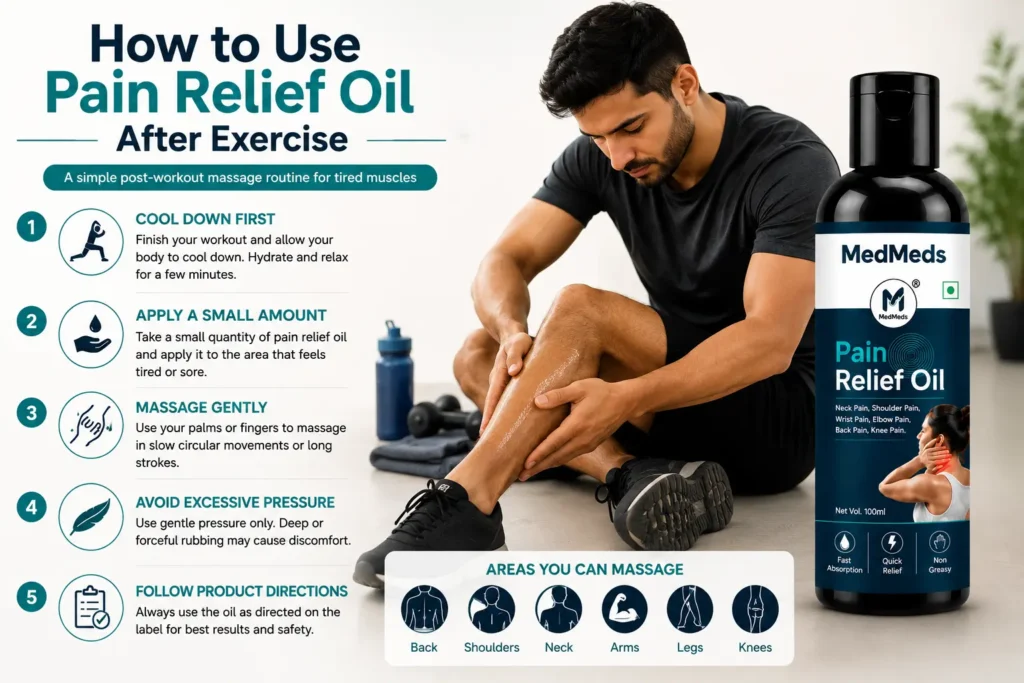
How to Use Pain Relief Oil After Exercise

How-to-Use-Pain-Relief-Oil-After-Exercise.

Using massage oil after exercise can be a simple way to include muscle relaxation in your post-workout routine. Before applying the oil, allow your body to cool down and take a few minutes to relax. This can help you transition from intense physical activity to a more comfortable recovery routine.

Step-by-Step Guide

1. Allow your body to cool down
After completing your workout, take some time to cool down. Gentle stretching, walking, and drinking water can be part of your normal post-exercise routine before starting the massage.

2. Apply a small amount of oil
Take a small quantity of back pain relief oil and apply it to the area that feels tired or tense. You do not need to use a large amount; enough oil to allow your hands to move smoothly over the skin is generally sufficient.

3. Massage gently
Use your palms or fingertips to massage the area using slow, comfortable circular movements. Long, gentle strokes can also be used depending on the body part and your comfort level.

4. Avoid excessive pressure
Post-workout muscles may already feel tired or sensitive, so avoid deep or forceful rubbing. A gentle massage is usually more comfortable than applying excessive pressure.

5. Follow the product directions
A pain relief oil should always be used according to the manufacturer’s instructions. Check the label for recommended application, frequency, and precautions.

Areas You Can Massage

Depending on the product’s intended use, massage may be performed on areas such as:

  • Back and lower back
  • Shoulders and neck
  • Arms and elbows
  • Thighs and calves
  • Knees and legs
  • Other areas affected by normal post-workout muscle tiredness

A Few Precautions

Pain relief oil is meant for external use only. Avoid applying it to cuts, wounds, irritated skin, or near the eyes. Wash your hands after application and stop using the product if you experience unusual irritation or discomfort.

If muscle or joint pain is severe, persistent, or associated with an injury, swelling, or significant loss of movement, it is better to seek advice from a healthcare professional rather than relying only on massage.

Massage Oil for Joint and Muscle Comfort

A gentle massage can be incorporated into your self-care routine when muscles feel tired after exercise. People searching for the best body massage oil for pain relief should consider the product’s ingredients, texture, intended application, and usage instructions.

Massage oil can make the hands glide more smoothly over the skin. A body massage oil for pain relief may therefore be used as part of a relaxing massage routine for tired areas such as the legs, shoulders, arms, or back.

Can Massage Oil Help Relax Muscles?

Massage can be a calming activity after a demanding workout and may help you feel more relaxed. A pain relief massage oil can make the massage experience smoother while giving you an opportunity to slow down after exercise.

The goal of a post-workout massage should be comfort rather than aggressive pressure. If you’re looking for massage oil for pain, choose a product intended for topical massage and follow its recommended directions.

Massage Oil for Joint Pain

Joints can feel tired after repetitive movements or physically demanding activities. People searching for massage oil for joint pain may use gentle massage as part of their personal body-care routine.

However, persistent joint pain, significant swelling, instability, or restricted movement requires appropriate professional evaluation. Massage oil should not be presented as a guaranteed treatment for an underlying joint condition.

How to Choose the Best Pain Relief Oil

When comparing products, look at the ingredients, intended use, directions, texture, and suitability for your skin. Searching for pain relief oil online can produce many different products, so evaluating the formulation is more useful than relying on a single marketing claim.

For post-workout massage, choose an oil that is designed for topical use and fits comfortably into your routine. If you are comparing joint pain relief oil products, consider whether the product is intended for massage around the specific area you want to care for.

Why Choose MedMeds Pain Oil?

MedMeds Pain Oil is designed as a topical massage oil for everyday body and muscle care. It can be considered by people looking for knee pain relief oil as part of a gentle massage routine.

The formulation includes several traditional and aromatic ingredients, including Mahavish Garbh Oil, Iramedadi Oil, Narayana Oil, Tarprin Oil, Nilgiri Oil, Sat Ajwayan, Menthol, and Kapoor. It can be used by consumers searching for a muscle relaxant oil for their massage routine.                           

Final Thoughts

Taking care of your body after exercise involves more than massage alone. Rest, hydration, nutrition, sleep, and appropriate exercise progression all contribute to a balanced recovery routine, while pain oil can be included as a simple topical massage option.

Whether you’re looking for an oil for muscle pain , an oil for post-workout massage, or a product for everyday body care, choose one according to its ingredients and intended use. Persistent or severe pain should always receive appropriate profes

FAQ

Yes, gentle massage with a suitable topical oil can be included in a post-workout relaxation routine. It may provide a soothing sensation and help you feel more comfortable after physical activity.

Allow your body to cool down first. After your workout, you can relax for a few minutes before applying a small amount of oil and beginning a gentle massage.

Apply a small amount of oil and use your palms or fingertips for slow circular movements or gentle strokes. Avoid excessive pressure, especially when muscles feel sensitive after exercise.

Depending on the product’s intended use, massage can be performed on areas such as the back, shoulders, neck, arms, legs, thighs, calves, and knees.

Traditional formulations may contain ingredients such as Mahavish Garbh Oil, Iramedadi Oil, Narayana Oil, Tarprin Oil, Nilgiri Oil, Sat Ajwayan, Menthol, and Kapoor (Camphor).

Yes. Menthol is commonly used in topical products because it can provide a noticeable cooling sensation when applied to the skin.

Yes, a suitable topical massage oil can be incorporated into a gentle massage routine for tired legs after activities such as running, walking, or cycling.

It can be used as part of a topical massage routine when the product is intended for that purpose. Always follow the manufacturer’s directions and precautions.

No. Topical pain-relief oils should not be applied to cuts, wounds, or irritated skin. Avoid contact with the eyes and discontinue use if unusual irritation occurs.

If pain is severe or persistent, or you have an injury, significant swelling, instability, or restricted movement, seek appropriate professional medical advice rather than relying only on massage.

pain relife oil compelete guid

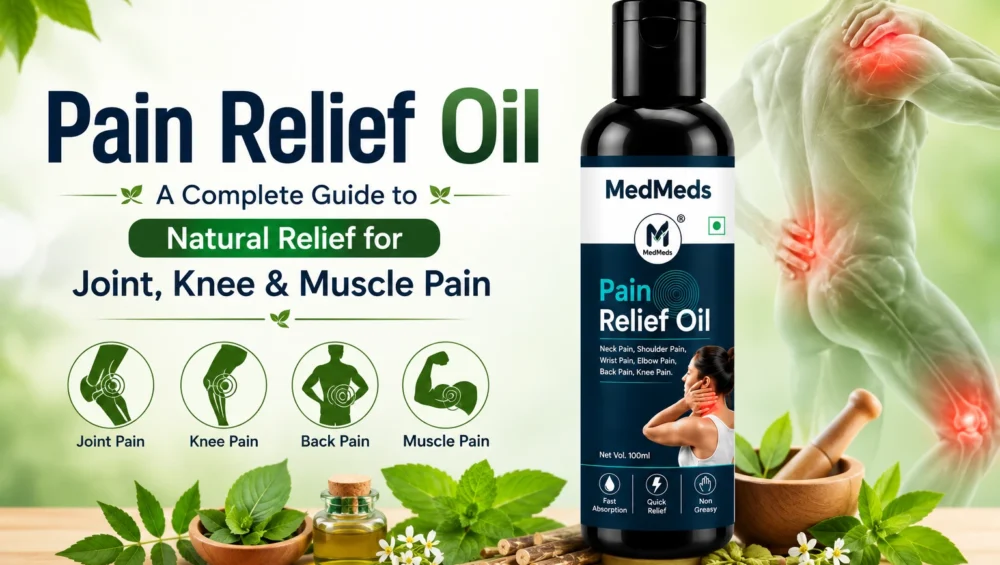
Pain Relief Oil: A Complete Guide to Natural Relief for Joint, Knee & Muscle Pain

Whether you’re climbing stairs, working at a desk for hours, exercising regularly, or managing household tasks, joint and muscle discomfort can affect your daily routine. Poor posture, ageing, repetitive movements, and an inactive lifestyle are some of the most common reasons behind these problems.

Many people include pain relief oil in their self-care routine because it may help relax tired muscles and support joint comfort when combined with regular exercise, stretching, and healthy habits. Choosing the right massage oil and using it correctly can make a noticeable difference in everyday mobility.

In this guide, you’ll learn how herbal massage oils work, their traditional ingredients, benefits, and the best ways to use them for daily wellness.

What Is Pain Relief Oil?

Pain relief oil is a herbal massage oil made for external application on muscles and joints. It contains natural oils and herbal extracts that have traditionally been used in Ayurveda to support muscle relaxation and everyday joint comfort.

Unlike oral medicines, massage oils are applied directly to the affected area. A gentle massage, along with herbal ingredients, may help improve circulation, reduce temporary stiffness, and support comfortable movement.

Quick Overview

FeatureDetails
Product TypeHerbal massage oil
ApplicationExternal use only
Suitable ForHealthy adults
Common UseDaily muscle and joint massage
Best Time to ApplyAfter work, exercise, or before bedtime

Why Do People Experience Joint & Muscle Pain?

Joint and muscle discomfort can happen to anyone, regardless of age. Understanding the cause is the first step toward better joint care.

Common Causes

  • Long hours of sitting or standing
  • Poor posture while working
  • Heavy lifting
  • Sports and gym workouts
  • Muscle overuse
  • Age-related wear and tear
  • Lack of regular physical activity
  • Excess body weight
  • Stress-related muscle tightness

People experiencing a stiff knee joint may also notice difficulty while walking, climbing stairs, or standing for long periods.

Common Symptoms

If you frequently experience these signs, your body may need better recovery and care:

  • Knee discomfort after walking
  • Muscle soreness after exercise
  • Lower back stiffness
  • Shoulder and neck tightness
  • Difficulty bending or stretching
  • Reduced flexibility
  • Fatigue after physical work

If pain becomes severe, lasts for a long time, or is associated with swelling or injury, seek advice from a qualified healthcare professional.
How Does Pain Relief Oil Work?

A quality herbal massage oil works through the combination of massage and carefully selected herbal ingredients. While it is not a substitute for medical treatment, it may support everyday comfort and mobility.

A herbal massage oil may help by:

✔ Relaxing tired muscles after daily activities

✔ Supporting healthy blood circulation during massage

✔ Reducing temporary muscle stiffness

✔ Promoting flexibility around joints

✔ Supporting recovery after physical activity

✔ Providing a soothing warming or cooling sensation, depending on the formulation

Many people choose joint pain oil after long office hours or physical work because massage can help muscles feel more relaxed and refreshed.

Why Is Massage Important?

Massage has been used for centuries as part of traditional wellness practices. When performed correctly, it may support muscle relaxation and improve overall comfort.

Benefits of Regular Massage

  • Encourages muscle relaxation
  • Supports better flexibility
  • Promotes everyday mobility
  • Helps reduce feelings of tiredness after physical work
  • Complements stretching and exercise
  • Supports an active lifestyle

Some people also use oil for muscle pain after workouts or physically demanding activities to support recovery as part of their overall wellness routine.

Who May Benefit?

A herbal massage oil can be a useful addition to a healthy lifestyle for:

  • Office professionals
  • Senior citizens
  • Homemakers
  • Gym enthusiasts
  • Athletes
  • Drivers
  • People with physically demanding jobs

Regular massage, balanced nutrition, hydration, and exercise work together to support long-term muscle and joint wellness.

Key Takeaways

  • Pain relief oil is designed for external massage to support muscle and joint comfort.
  • Everyday habits like poor posture and overuse can contribute to stiffness and soreness.
  • Massage combined with herbal ingredients may help promote relaxation and mobility.
  • Consistency, along with a healthy lifestyle, is more effective than relying on any single product.

Key Ingredients Commonly Found in Pain Relief Oils

The effectiveness of a herbal massage oil depends on the quality of its ingredients. Many traditional formulations combine essential oils and Ayurvedic herbs that have been used for generations to support joint and muscle wellness.

Note: Ingredients may vary from one brand to another. Always check the product label before use.

IngredientTraditional Use
Wintergreen OilTraditionally used for a soothing warming effect during massage.
MentholProvides a cooling sensation that may help refresh tired muscles.
CamphorCommonly used in massage oils to support relaxation and everyday comfort.
Nilgiri (Eucalyptus) OilTraditionally valued for its refreshing aroma and massage benefits.
Sesame OilHelps nourish the skin and acts as a carrier oil for herbal extracts.
Turpentine OilUsed in traditional massage formulations for muscle comfort.

These herbal ingredients work together with massage to support relaxation rather than replacing professional medical care.

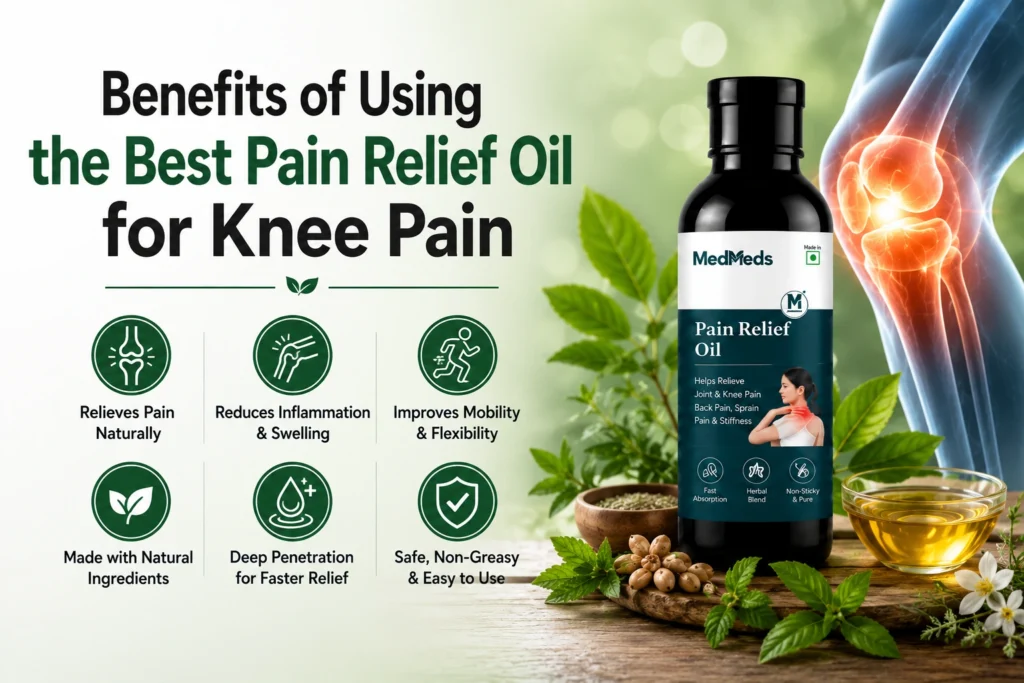
Benefits of Using Pain Relief Oil

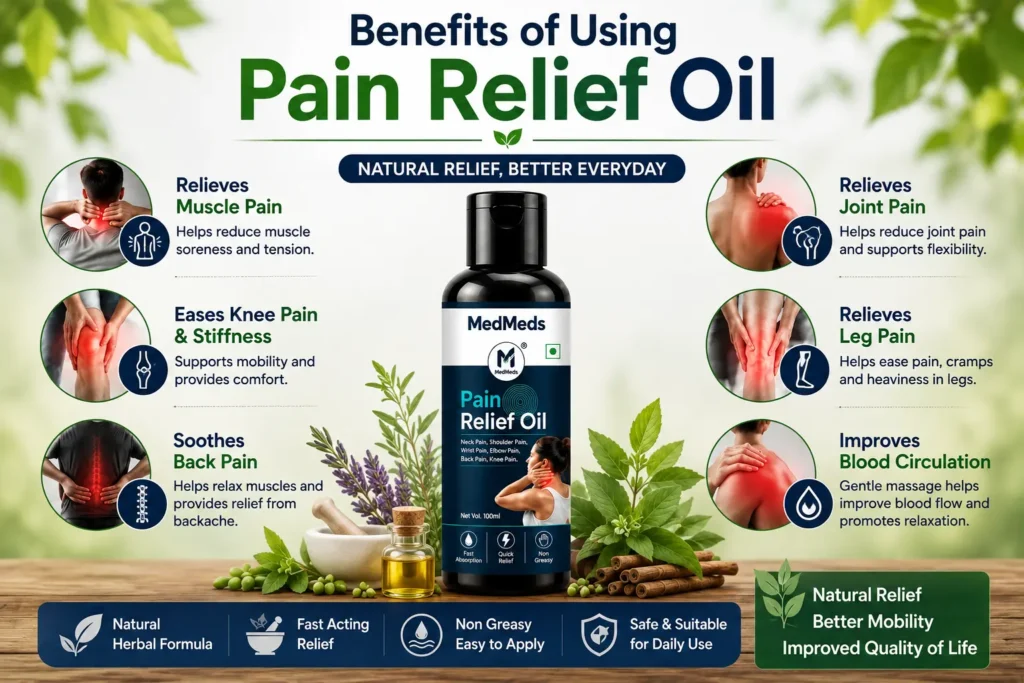
benefit-of-using-pain-oil.

Using a quality herbal massage oil regularly may support overall joint and muscle wellness when combined with stretching, exercise, and a healthy lifestyle.

1. May Support Joint Comfort

Regular massage with joint pain relief oil may help reduce temporary stiffness and improve everyday comfort around the joints.

2. Helps Relax Tired Muscles

Long working hours, travel, or exercise can leave muscles feeling tired. A gentle massage using muscle pain relief oil may help the body feel more relaxed after physical activity.

3. Supports Knee Mobility

Many people prefer knee pain relief oil as part of their daily massage routine because it may help maintain flexibility and support comfortable movement.

4. Helps Ease Everyday Back Discomfort

People who spend long hours sitting often experience lower back tightness. Using back pain relief oil during massage may complement stretching and posture correction.

5. Supports Muscle Recovery

Massage after exercise can help muscles recover more comfortably by encouraging relaxation and improving circulation.

6. Promotes an Active Lifestyle

When muscles feel relaxed, everyday activities such as walking, climbing stairs, and household work often become more comfortable.

Benefits at a Glance

BenefitHow It May Help
Muscle RelaxationSupports recovery after physical activity
Joint ComfortHelps maintain daily mobility
FlexibilityEncourages easier movement
Massage SupportPromotes relaxation and circulation
Everyday WellnessComplements healthy lifestyle habits

Who Can Use Pain Relief Oil?

A herbal massage oil is commonly used by adults looking to support everyday muscle and joint comfort.

It may be suitable for:

  • Office professionals
  • Senior citizens
  • Gym enthusiasts
  • Athletes
  • Homemakers
  • Drivers
  • People with physically demanding jobs

Many users looking for the best pain relief oil choose herbal formulations as part of their daily wellness routine.

How to Apply Pain Relief Oil Correctly

Using massage oil correctly can improve your overall experience.

Follow These Steps

Step 1: Clean and dry the affected area.

Step 2: Take a small amount of massage oil for pain in your palm.

Step 3: Massage gently using circular motions for 5–10 minutes.

Step 4: Allow the oil to absorb naturally.

Step 5: Wash your hands after application.

Best Time to Apply

  • After work
  • After exercise
  • Before bedtime
  • After long travel
  • After physical activity

Healthy Habits That Work Alongside Massage

For better long-term joint wellness, combine massage with healthy daily habits.

✔ Stretch regularly

✔ Stay physically active

✔ Maintain a healthy weight

✔ Drink enough water

✔ Eat a balanced diet

✔ Improve your sitting posture

✔ Get adequate sleep

Massage alone cannot replace healthy lifestyle choices. Consistency with exercise, movement, and self-care is equally important.

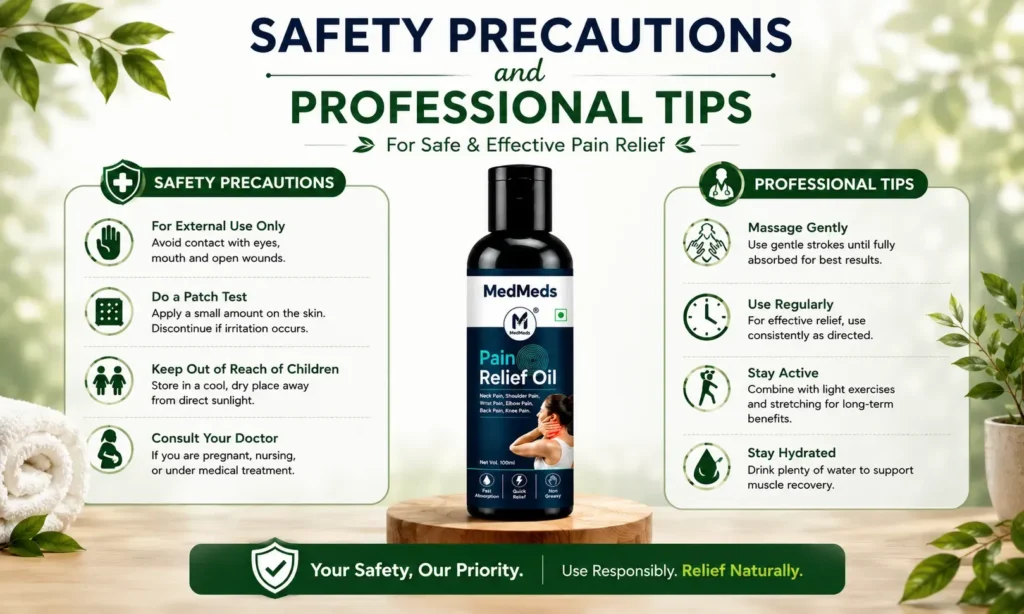
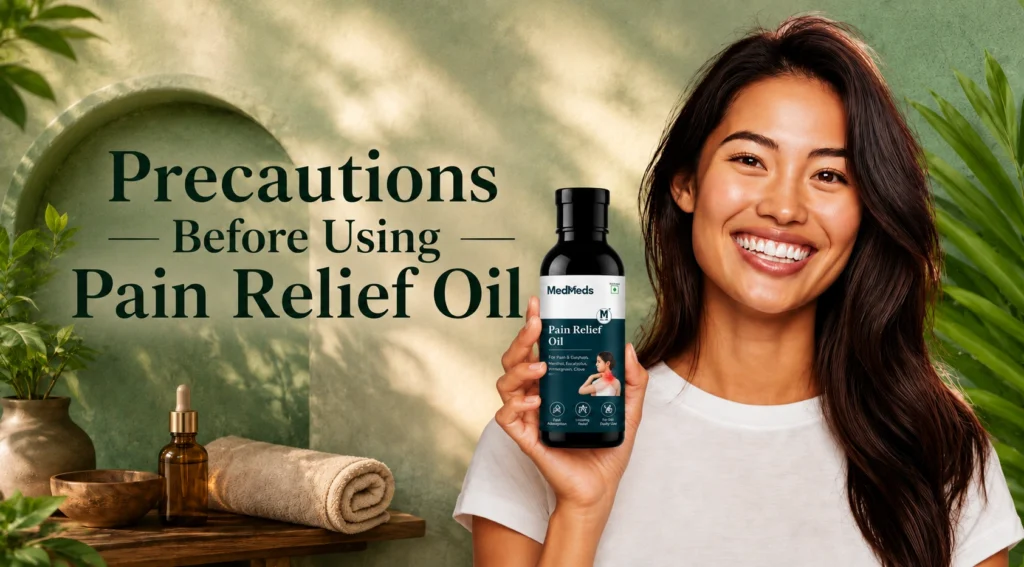
Precautions Before Using Pain Relief Oil

Using herbal massage oil correctly helps you get the best experience while reducing the chances of skin irritation.

Keep These Points in Mind

  • Read the product label before use.
  • Use only as directed.
  • Apply on clean, dry skin.
  • Avoid contact with eyes, mouth, and open wounds.
  • Do not apply on broken or infected skin.
  • Wash your hands after massage.
  • Store the bottle in a cool, dry place.
  • Keep out of reach of children.

If you are pregnant, breastfeeding, have sensitive skin, or are undergoing treatment for a medical condition, consult a qualified healthcare professional before using any massage oil.

Possible Side Effects

Most herbal massage oils are well tolerated when used as directed. However, individual responses can vary depending on skin type and ingredients.

Possible Reactions

  • Mild skin irritation
  • Temporary redness
  • Allergic reaction to herbal ingredients
  • Burning sensation on sensitive skin

Stop Using the Oil If You Notice

  • Severe itching
  • Swelling
  • Skin rash
  • Persistent irritation

Seek medical advice if symptoms continue or worsen.

Pain Relief Oil at a Glance

FeatureDetails
Product TypeHerbal Massage Oil
Suitable ForHealthy adults
UsageExternal application only
Best Time to UseAfter work, exercise, or before bedtime
SupportsMuscle relaxation & joint comfort
Lifestyle SupportExercise, stretching & healthy diet

Why Consistency Matters

Many people expect quick results after using a massage oil once or twice. However, long-term joint and muscle wellness depends on consistent self-care rather than any single product.

For better results:

  • Massage regularly.
  • Stay physically active.
  • Stretch daily.
  • Maintain a healthy body weight.
  • Drink enough water.
  • Eat a balanced diet.
  • Get quality sleep.

People searching for the best body massage oil for pain relief often overlook these healthy habits. A massage oil works best when it complements an active lifestyle instead of replacing it.

Conclusion

Joint and muscle discomfort can affect people of all ages, but healthy daily habits can make a positive difference. Regular movement, stretching, balanced nutrition, proper posture, and adequate rest all contribute to better mobility and overall well-being. A quality body pain relief oil may become a useful part of your daily wellness routine by supporting muscle relaxation and temporary comfort through massage. If you’re looking for a natural option, choosing a well-formulated best pain relief oil in india from a trusted brand, following the recommended directions, and staying consistent with healthy habits may help you maintain an active lifestyle.

The World Health Organization (WHO) also encourages regular physical activity as an important part of maintaining musculoskeletal health and overall wellness. Remember that herbal massage oils are designed to complement—not replace—professional medical care. If pain is severe, persistent, or follows an injury, consult a qualified healthcare professional.
(FAQs)

It is generally used for external massage to support temporary muscle and joint comfort as part of a healthy lifestyle.

Follow the usage instructions on the product label. Daily use may be suitable for some people, but always use the oil as directed.

Many people massage their lower back after long sitting hours to help relax tired muscles.

Yes, athletes and fitness enthusiasts often include herbal massage oils in their recovery routine after workouts.

The ideal choice depends on the quality of ingredients, brand reputation, manufacturing standards, and individual needs.

No. Massage oil is intended to support comfort and should not replace prescribed treatment or medical advice.

Keep it tightly closed in a cool, dry place away from direct sunlight and out of the reach of children.

Older adults may use herbal massage oils if appropriate for them, but they should consult a healthcare professional if they have ongoing joint conditions or are taking medications.

Medical Disclaimer

This article is intended for educational and informational purposes only. It does not provide medical advice, diagnosis, or treatment. Herbal massage oils are wellness products and should not be considered a substitute for professional healthcare. If you have persistent pain, swelling, an injury, or any medical condition, consult a qualified healthcare professional before using any product.

About the Author

MedMeds Editorial Team

The MedMeds Editorial Team creates evidence-informed health and wellness content focused on accuracy, readability, and responsible wellness practices. Every article is reviewed to provide practical guidance, encourage healthy lifestyle habits, and promote informed decisions about herbal wellness products.

Herbal pain relief oil for joint pain, knee pain and muscle pain fast natural relief

Best Herbal Pain Relief Oil for Joint Pain (Fast Natural Relief for Knee & Muscle Pain)

Joint pain, knee stiffness, and muscle discomfort are common problems caused by aging, long sitting hours, and physically demanding routines. Whether it’s knee pain, back pain, or muscle soreness, finding a safe and effective solution is essential.

Many people are now switching to herbal pain relief oil as a natural alternative to chemical creams. A high-quality herbal pain relief oil for joint pain helps reduce inflammation, improve mobility, and provide fast relief without harmful side effects.

In this guide, you’ll learn how natural pain relief oil works and how it can help with joint, knee, and muscle pain.

What is Herbal Pain Relief Oil?

Herbal pain relief oil is a blend of plant-based extracts and essential oils designed to relieve joint and muscle pain naturally. It is applied externally and works by penetrating deep into the affected area.

It is commonly used as:

  • pain relief oil for knee pain
  • natural oil for muscle pain relief
  • herbal oil for joint pain
  • oil for back and neck pain

Because it is made from natural ingredients, it is widely used as a natural remedy for joint pain without relying on strong medications.

How Herbal Pain Relief Oil Works

A good herbal pain relief oil for joint pain works through multiple mechanisms:

  • Improves Blood Circulation– Massage with natural pain relief oil for back and joint pain increases blood flow and supports healing.
  • Reduces Inflammation– A herbal oil for inflammation helps reduce swelling, one of the main causes of pain
  • Relaxes Muscles– Using a natural oil for muscle pain relief helps reduce tension and stiffness.
  • Supports Joint Mobility– Regular use of joint pain relief oil improves flexibility and movement.

Key Ingredients in Herbal Pain Relief Oil

The effectiveness of a pain relief oil for knee pain depends on its ingredients:

  • Eucalyptus Oil – helps as an oil for inflammation and pain relief
  • Camphor – improves circulation and works as a pain relief oil for joint pain
  • Menthol – provides instant soothing effect
  • Turmeric Extract – powerful natural anti-inflammatory
  • Ginger Oil – supports mobility and stiffness relief
  • Sesame or Mustard Oil – improves absorption

These ingredients make it one of the best oil for joint pain relief options.

Benefits of Herbal Pain Relief Oil

Using a herbal pain relief oil for joint pain and stiffness provides:

  • Natural and chemical-free relief
  • Fast relief from knee pain and muscle soreness
  • Reduced inflammation
  • Improved flexibility
  • Long-term joint support

It is widely used as a natural oil massage for joint pain.

Conditions It Can Help With

A natural pain relief oil can help manage:

  • Knee pain and stiffness
  • Arthritis and inflammation
  • Back and neck pain
  • Muscle soreness
  • Sports injuries

It is often used as a natural remedy for joint pain and stiffness.

Best Ways to Use Herbal Pain Relief Oil for Faster Relief

To get maximum benefit:

  • Apply herbal pain relief oil for knee pain 1–2 times daily
  • Massage gently for 5–10 minutes
  • Use after a warm bath
  • Combine with stretching

Using oil massage for joint pain regularly improves results.

Herbal Pain Relief Oil vs Chemical Pain Relief Creams

Herbal Pain Relief OilChemical Creams
Natural ingredientsSynthetic chemicals
Supports long-term healingTemporary relief
Safe for daily usePossible side effects

Choosing a natural pain relief oil is better for long-term use.

When Should You Use Herbal Pain Relief Oil?

You should use herbal oil for joint pain relief if you have:

  • Knee pain after walking
  • Joint stiffness in the morning
  • Muscle tightness
  • Chronic joint discomfort

Common Mistakes to Avoid

  • Not using enough oil
  • Skipping regular application
  • Expecting instant permanent results

Consistency is key when using a natural oil for joint pain relief.

How Long Does It Take to Work?

  • Instant effect: cooling relief
  • Short-term: reduced stiffness
  • Long-term: improved mobility

A good herbal pain relief oil for joint pain works best with regular use.

Who Should Use Herbal Pain Relief Oil?

This is ideal for:

  • People with knee pain
  • Individuals with joint stiffness
  • Athletes with muscle soreness
  • Office workers with posture pain

Conclusion

A high-quality herbal pain relief oil is one of the most effective natural solutions for managing pain, stiffness, and inflammation. It works as a natural oil while supporting long-term joint health.

If you are looking for a safe, effective, and natural option, using the best herbal pain relief oil for joint pain can help you achieve better mobility and comfort.

FAQ’S

Look for oils with eucalyptus, camphor, and turmeric.

Yes, it works as a pain relief oil for knee pain.

Yes, most natural pain relief oils are safe.

Yes, it works as a natural oil for muscle pain relief.

Relief can start within minutes.

Traditional-home-remedies-for-joints

Traditional Herbal Remedies for Joint and Muscle Discomfort

Joint and muscle discomfort is a common issue that can affect people of all ages due to aging, physical activity, stress, or underlying health conditions. While modern medicine offers quick solutions, many individuals are turning toward traditional herbal remedies for long-lasting and natural relief. These remedies, deeply rooted in Ayurveda and other ancient healing systems, focus on reducing inflammation, improving mobility, and promoting overall wellness.

In this article, we explore the most effective herbal remedies for joint and muscle discomfort and how they support natural healing.

Why Choose Herbal Remedies for Pain Relief?

Herbal remedies are gaining popularity because they offer a natural and holistic approach to pain management. Unlike chemical-based treatments, they aim to address the root cause of discomfort rather than just masking symptoms.

Benefits of herbal remedies include:

  • Fewer side effects
  • Natural anti-inflammatory properties
  • Long-term joint health support
  • Improved flexibility and mobility
  • Safe for regular use (when used properly)

Popular Traditional Herbal Remedies

1. Turmeric (Haldi)

Turmeric is one of the most powerful herbs used in traditional medicine. It contains curcumin, a compound known for its strong anti-inflammatory and antioxidant properties.

Benefits:

  • Reduces joint inflammation
  • Helps manage arthritis symptoms
  • Supports overall joint health

2. Ginger (Adrak)

Ginger has been used for centuries to relieve muscle soreness and joint pain. It works by reducing inflammation and improving circulation.

Benefits:

  • Eases muscle stiffness
  • Promotes blood flow
  • Reduces pain naturally

3. Ashwagandha

Ashwagandha is a well-known adaptogenic herb in Ayurveda that helps the body manage stress and inflammation.

Benefits:

  • Reduces joint swelling
  • Supports muscle strength
  • Improves recovery and energy

4. Eucalyptus Oil

Eucalyptus oil is widely used in herbal pain relief oils due to its cooling and soothing effects.

Benefits:

  • Provides instant pain relief
  • Reduces inflammation
  • Relaxes muscles

5. Sesame Oil (Til Oil)

Sesame oil is commonly used as a base oil in Ayurvedic massages. It penetrates deeply into tissues and nourishes joints.

Benefits:

  • Improves joint lubrication
  • Enhances flexibility
  • Supports detoxification

Herbal Oils for External Application

One of the most effective ways to use herbal remedies is through topical application. Herbal pain relief oils combine multiple ingredients to provide quick and targeted relief.

Regular massage with herbal oil can:

  • Improve blood circulation
  • Reduce stiffness and swelling
  • Promote relaxation and healing
  • Enhance joint mobility

This makes herbal oils a preferred choice for people dealing with chronic pain, arthritis, or post-workout soreness.

Lifestyle Tips to Enhance Herbal Remedies

For better results, herbal remedies should be combined with a healthy lifestyle:

  • Maintain a balanced diet rich in anti-inflammatory foods
  • Stay physically active with light exercise or yoga
  • Practice regular stretching
  • Stay hydrated
  • Get adequate rest and sleep

These habits help improve overall joint, muscle health and muscle stiffness .

Conclusion

Traditional herbal remedies offer a safe, natural, and effective way to manage joint and muscle discomfort. With powerful ingredients like turmeric, ginger, and eucalyptus oil, these remedies not only relieve pain but also support long-term joint health.

When combined with a healthy lifestyle and supportive supplements, herbal solutions can provide a holistic approach to pain management and overall well-being. Whether you are dealing with occasional soreness or chronic discomfort, embracing natural remedies can be a step toward a healthier, more active life.

FAQ’S 

Yes, many herbs have anti-inflammatory properties that help reduce pain and improve joint function.

Most herbal remedies are safe for daily use, but it is best to follow recommended guidelines.

They can provide quick relief, especially when massaged into the affected area.

They help manage symptoms but do not cure arthritis.

Yes, especially if you have existing medical conditions or are on medication.

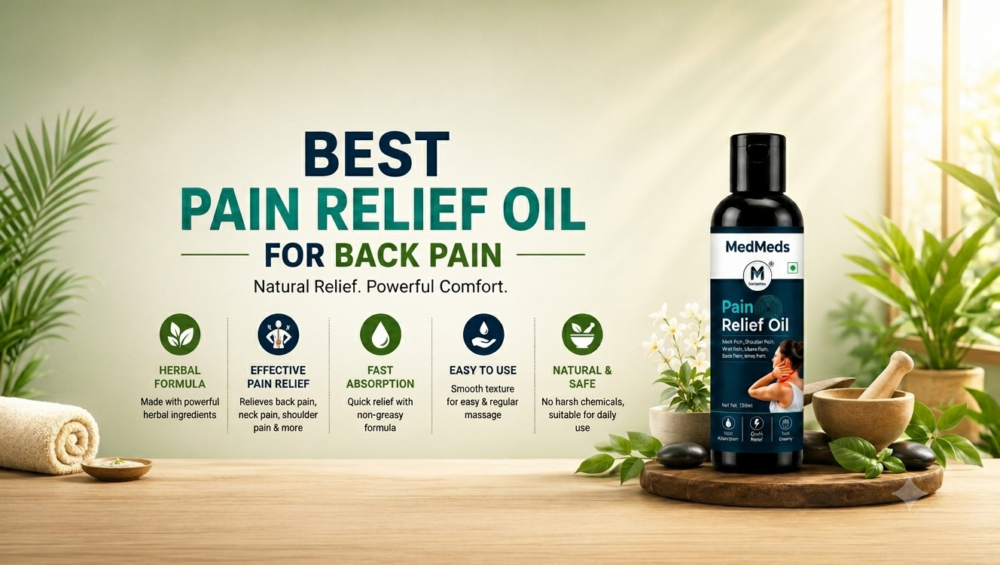
best back pain oil

Best Pain Relief Oil for Back Pain: Why Herbal Oils are Natural Choice for Back Pain

Back pain is really common now, affecting people of all ages. It can disrupt your day whether it is caused by long working hours, poor posture, lifting something heavy, or physical activity.

Many people are looking for natural ways to feel better without relying entirely on medications. This is why Pain Relief Oil has become a popular option. Herbal formulations combine traditional wellness practices with natural ingredients that help support comfort and mobility.

Understanding Back Pain and Its Causes

Back pain can develop due to:

  • Poor posture while sitting or standing
  • Muscle strain from physical work or exercise
  • Joint stiffness associated with aging
  • Sports-related injuries
  • Inflammation in muscles and joints
  • Arthritis-related discomfort

If these issues are not addressed, they can lead to chronic pain, reduced flexibility, and difficulty performing daily activities.

Why People Are Choosing Herbal Oils for Back Pain

Many individuals prefer Back Pain Relief Oil because they offer a natural approach to wellness. Unlike chemical-based products, herbal formulations use plant-based ingredients traditionally known for their soothing properties.

Natural Ingredients

  • These herbal oil often contain ingredients such as camphor, sesame oil, wintergreen oil, peppermint, and other herbal extracts that help provide a soothing sensation and support relaxation. 

Targeted Relief

  • Unlike oral medications, a Back Pain Relief Oil is applied directly to the affected area. This allows the ingredients to work exactly where support is needed, making it suitable for localized muscle and back discomfort.

Massage Benefits

  • One of the biggest advantages of using herbal oils is the benefit of an Oil Massage for Back Pain. Massage may help improve blood circulation, relax tense muscles, reduce stiffness, and support overall comfort.

Daily Use Convenience

Many herbal oils absorb quickly and are easy to apply, making them suitable for people who need regular support throughout the day.

Traditional Herbal Ingredients

Pain Relief Oil contains a carefully selected blend of herbal oil  traditionally used to support muscle and joint comfort. The formulation includes:

  • Mahavish Garbh Oil – Traditionally used to support relief from muscle and joint discomfort.
  • Iramedadi Oil – Known in herbal wellness practices for its soothing properties.
  • Narayan Oil – Commonly used in traditional massage therapies to help support mobility and flexibility.
  • Tarpin Oil – Often included in topical formulations for its warming and comforting effect.
  • Nigiri Oil (Eucalyptus Oil) – Known for its refreshing aroma and soothing sensation during massage.
  • Sat Ajwain – Traditionally used to provide a warming effect and support comfort in sore areas.
  • Menthol Flower – Creates a cooling sensation that helps refresh tired muscles.
  • Kapoor (Camphor) – Widely used in herbal massage oils to provide a soothing and relaxing experience.

Best Reasons To Choose MedMeds Pain Relief Oil?

If you are searching for the Best Pain Relief Oil in India, MedMeds Pain Relief Oil is designed to support relief from neck pain, back pain, knee pain, and muscle discomfort.

Supports Back Pain Relief

  • Back pain often results from muscle tension and stiffness. Regular application may help improve flexibility and support easier movement.

Helps Relax Muscles

  • The oil can be used after exercise, physical activity, or long working hours to help soothe tired muscles.

Supports Joint Comfort

  • Many people experience both joint discomfort and back pain simultaneously. Herbal oils are often used to help reduce stiffness and improve mobility.

Easy to Apply

  • The oil is simple to use and can easily become part of a daily self-care routine.

How to Use Herbal Oil for Pain

To get the best results from a Herbal Oil, follow these simple steps:

  • Clean and dry the affected area.
  • Apply a small amount of oil to the upper or lower back.
  • Massage gently using circular motions.
  • Allow the oil to absorb completely.

Use regularly according to the product instructions.

For better results, combine regular application with stretching exercises, proper posture, and adequate hydration.

Additional Tips to Prevent Back Pain

While using the Best Pain Oil can provide support, healthy lifestyle habits are equally important.

  • Maintain proper posture while sitting and standing.
  • Exercise regularly to strengthen muscles that support the spine.
  • Stretch frequently to improve flexibility.
  • Lift heavy objects using proper techniques.
  • Get enough rest to support muscle recovery.

Conclusion

Back pain can interfere with work, exercise, and everyday activities. Choosing the right pain relief oil can help support mobility, flexibility, and overall comfort.

Herbal oils remain a popular option because they combine natural ingredients with the therapeutic benefits of massage. When used consistently alongside healthy lifestyle habits, MedMeds Pain Relief Oil may help reduce stiffness, relax muscles, and support a more active lifestyle.

FAQ’S

Yes. MedMeds Pain Relief Oil is designed to help support relief from muscle soreness, stiffness, and discomfort caused by physical activity or prolonged sitting.

Herbal pain relief oils use natural ingredients and are applied through massage, which may help support relaxation and improve circulation.

Yes. Older adults experiencing stiffness or mobility concerns may find herbal oils useful as part of their daily wellness routine.

Results vary from person to person. Many users experience a soothing sensation shortly after application, while regular use may provide better long-term support.

what is muscle stiffness

What is Muscle Stiffness? Definition and Overview

Muscle stiffness is way more than just a little discomfort, it’s kinda a physiological state where your muscle fibers hang out in a constant, involuntary partial contraction. Most times muscles act like an elastic band they stretch so you can move, and then they ease up when you’re resting. But when stiffness shows up, the fibers don’t really get the right biochemical or neurological signal to relax, so the tissue stays rigid and tight, kind of stubborn too. It pushes back against pressure, and even small motions, like your body is asking for one thing and the tissue just refuses to cooperate, even there.

Also it’s kind of different from joint pain. Joint pain often begins in the skeletal structure, or maybe in the cartilage, while Muscle Stiffness is rooted in the soft tissue itself, and that alone can narrow your normal range of motion. When that tension sticks around for long stretches , it can start pressing on nearby capillaries, which then cuts local blood flow quite a lot. After that the metabolic waste like lactic acid lingers in the same region, and suddenly you end up in this loop: dull aching, local throbbing and this heavy restricted feeling. So routine movements start feeling like an uphill battle every single time.

Muscle Stiffness Meaning: What Does It Actually Mean?

To really get the muscle stiffness meaning, you kinda gotta look at how regular everyday life messes with muscle biology in a close up way. Like if someone has chronic stiffness , the muscles are sorta… locked into a guarded holding pattern, almost like theyre bracing for something that never ends , even when nothing is actually going on. This tends to happen because the careful balance of intracellular minerals gets thrown off , mainly calcium and magnesium, and those are basically the molecular on-off switches for muscle behavior. Calcium kind of nudges a muscle to contract, but magnesium supports the “relax” signal, so if that equilibrium goes off, or if the nervous system keeps getting overstimulated for too long , the muscles start staying “switched on” in a sense.

Also, prolonged stillness, or constant repetitive strain doesn t just sit there quietly. It does something. Like, it tweaks the fascia, that dense web of connective tissue that wraps around basically every muscle, and it’s not subtle, at all. When you stay static for too long, the fascia loses hydration and that springy suppleness , then it starts thickening, and it can even help bond muscle fibers together more than it should. And this structural tightening, really, is often why you feel stiff and inflexible, because movements that are normally fluid and natural begin turning into rigid, forced actions, like the body forgot how to ease back out again.

Muscle Stiffness Causes: Why Are Your Muscles Feeling So Tight?

Identifying the exact muscle stiffness causes is the first step toward reclaiming your body’s natural agility. Muscle tissue doesn’t tighten up without a reason; it is always a direct response to specific physical or environmental triggers:

  • The Sedentary Desk Trap, (Prolonged Inactivity): is kind of a sneaky thing. Human bodies are biologically made for movement. When you sit in the same rigid chair for hours, your hip flexors, hamstrings, and the lower back muscles stay in a shortened kind of state. Eventually the brain adapts to that posture , it basically starts reprogramming the muscles to stay permanently tight, even after you finally stand up.
  • Micro Tears and delayed onset muscle soreness DOMS: when you push your body through heavy lifting, an intense at home workout, or some unfamiliar physical labor you end up creating tiny micro tears in the muscle fibers. While this is totally normal for building more strength, your body’s own inflammatory response to repair those micro tears triggers widespread swelling, and that can feel like intense stiffness about 24 to 48 hours later..
  • Cellular Dehydration and Electrolyte Depletion: Water acts as the primary transport medium for nutrients inside muscle cells. When you do not drink enough fluids, or when you lose vital minerals like sodium and potassium through sweat, the muscle cells shrink and lose their ability to glide past one another, resulting in intense rigidity, sudden knots, and painful cramping.
  • Mechanical Stress from Postural Imbalances: Slouching over a computer screen, leaning to one side while driving, or looking down at a smartphone forces your structural muscles to work overtime. To prevent your skeleton from collapsing forward, the muscles in your neck and spine undergo continuous isometric contraction, hardening like concrete to support the extra weight.
  • The Psychological Stress Reflex: When your mind experiences psychological stress or anxiety, your central nervous system triggers a primitive “fight-or-flight” response. This hormonal surge floods your body with cortisol, causing your muscles—especially around the jaw, shoulders, and back—to clench tightly in anticipation of a physical threat that never comes.
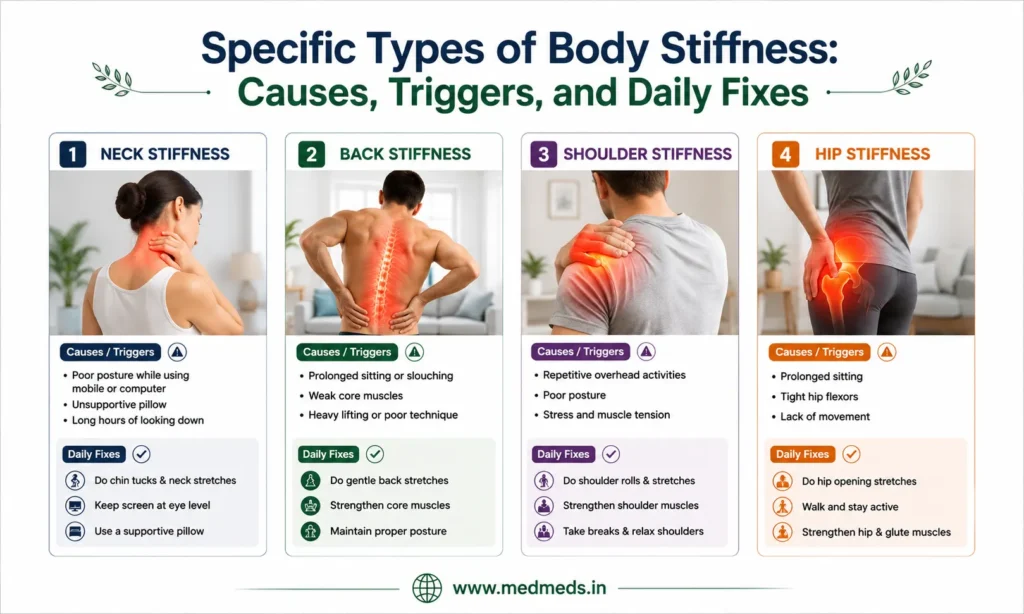
specific types of stiffness

Specific Types of Body Stiffness: Causes, Triggers, and Daily Fixes

 Neck Stiffness

  • What it is: Neck stiffness is basically this acute tightening in the levator scapulae and trapezius muscles, that hold up the skull and also manage neck turning, pretty much day to day.  
  • Why it happens (Triggers): usually it’s because you spend hours staring at a monitor that’s not positioned well , or you’re cradling your phone between your ear and shoulder, and then there’s the classic sleeping on a pillow that’s unsupportive or lumpy, so the head just sits wrong.  
  • What you did to trigger it: you probably were scrolling the previous evening on a digital tablet or smartphone for hours, looking down a lot, which means the smaller muscles in the upper neck have to keep supporting a heavy head at this awkward angle.  
  • How to fix it naturally: start with slow, careful chin tucks to help bring the cervical spine back into a better line , then do gentle lateral neck tilts, guiding your ear toward your shoulder without rushing. Also, swap out thick pillows for an ergonomic contoured memory foam pillow so you don’t get that same overnight strain again.

 Back Stiffness (Lower & Upper Back)

  • What it is: This is basically deep, tiring rigidity that shows up across the big erector spinae muscles and the latissimus dorsi, those run sorta parallel to your spine, like both sides are just stuck, not really cooperating  
  • Why it happens (Triggers): Usually it comes from a weak core ,so your back muscles end up taking the whole load, you lift objects by folding at the waist instead of using your knees, or maybe you keep sitting on a soft, sagging couch, where it just flattens the usual lumbar curve  
  • What you did to trigger it: You probably lifted a heavy box or carried a grocery bag with rounded shoulders, or you stayed stuck in an office chair for like four hours straight and didn’t stand once to reset your posture .  
  • How to fix it naturally: Try gentle movement work like Cat-Cow stretch to help lubricate the spinal discs, or lie flat on your back and draw your knees toward your chest to decompress the lower back. Also focus on dynamic walking, like regular purposeful steps, to get fresh blood back into the spinal tissues and calm everything down

Shoulder Stiffness

  • What it is: it’s like a pretty severe sense of tightness that just hangs around the deltoids, the rhomboids, and the whole tangled web of tendons that basically keep the arm anchored in the shoulder joint so it stays, put.  
  • Why it happens, triggers: repetitive overhead motions of course , or sleeping completely on one side with your arm kinda pinned in an odd position under your body. Also if you leave your arms sitting on high desk surfaces, your shoulders end up doing this constant upward hunch, kind of stuck there.
  • What you did to trigger it: maybe you spent the day painting a wall, tossing a ball, or doing desk work with the table too high. That forces your shoulders to carry the load of your arms, with zero real pause.  
  • How to fix it naturally: do gentle shoulder shrugs, then backwards arm circles, to help open up the chest space. Try “wall walks” too—slowly crawl your fingers up a wall to extend your shoulder’s range of motion in a gradual and safe manner.4. Knee & Leg Stiffness

Hip Stiffness

  • It’s basically this deep seated kind of tightness, like it’s stuck in the iliopsoas area (your hip flexors) and also in the glute muscle groups. It tends to really clamp down and that, you know, limits your stride when you’re walking.  
  • And why it happens, well, it’s often linked to the modern lifestyle where your hips stay bent, like around a ninety degree angle, for most of the day. Then over time your hip tendons get physically shortened, not just “tight” in some temporary way.  
  • As for what triggered mine, it was sitting down for nearly the entire day. At breakfast, then on the commute , at my desk, and later on the living room sofa, with no real counter stretches to open the hips back up.  
  • To fix it naturally, I’d say try deep low lunges and when you go into them gently push your pelvis forward, kind of to elongate the tight hip flexors. Also add the butterfly stretch, pressing your knees down toward the floor, so you can open up the inner groin and hips a bit more.

What to Do If Natural Stretching and Rest Fail to Bring Relief?

You’ve spent days downing gallons of water , re-arranging your office ergonomics , trying every little stretch you can find online and telling yourself to rest even when you really dont want to… yet that deep, heavy iron-like stiffness in your muscles still wont move. And once that stiffness reaches this stubborn chronic stage it kind of looks like everything has settled really deep into the intramuscular matrix.

At that point, those surface level fixes , even the “easy” ones , just arent enough. The tiny blood vessels inside the locked muscle tissue have tightened up so much that your body basically cant deliver its own natural healing nutrients there. So to break this miserable loop of nonstop tension and pain, you need an external influence that can pass through skin barriers , get down into the muscle layers, and quickly jumpstart circulation so the rigidity loosens from the inside out.

The Ultimate Solution: Experience Instant Mobility with Our Premium Pain Relief Oil

When ordinary adjustments fail to restore your freedom of movement, our specially formulated Pain Relief Oil offers a direct, powerful pathway to comfort. Purpose-built to conquer chronic stiffness, stubborn muscular knots, and deep joint distress, this premium pain oil combines traditional botanical wisdom with high-absorption science to deliver rapid, lasting relief right where your body needs it most.

Why Our Pain Relief Oil Works Wonders on Stiffness:

  • Intense transdermal penetration : most common pain relief gels and sprays sort of just lean on menthol, like , to freeze or numb the skin surface for a bit, our oil uses deeply going carrier agents that move active anti-inflammatory herbal molecules down into the underlying muscle fibers, kinda quietly but definitely farther than usual.  
  • Thermal micro circulation activation : when you apply it, the special herbal compounds react gently with the tissue to make a comforting, localized warmth. That heat then opens up constricted blood vessels right away, so the stiff muscle gets oxygen-rich blood, flushing out stuck residues and lactic acid.  
  • Natural tissue relaxation : filled with organic anti-inflammatory extracts and those muscle soothing botanicals, this therapeutic oil works directly on hyperactive nerve endings, sort of telling the locked muscle spindles to loosen up and release their painful grip.  
  • Restores joint lubrication : massaged around sore zones like the knees, the lower back, or the neck , it helps calm localized inflammation, easing the mechanical tension on your tendons and bringing back smooth , fluid motion to your joints.How to Use It for Best Results:

To totally transform your stiff muscles , pour a generous coin-sized amount of the Pain Relief Oil into your palms, then rub them together a bit to warm up the oil. Put it straight onto the affected area , no matter if it’s your aching lower back, your stiff neck, or your tight knees.

With steady circular motions, massage the oil deep into the skin for about 5 to 10 minutes, so the beneficial ingredients have a chance to soak in completely.

For the best kind of comfort , use this oil right after a warm bath while your pores are more open, or work it thoroughly into your muscles right before bed so that its deep-support action can help your body repair , ease, and bring itself back as you sleep.

Stop letting everyday stiffness take over your life. Feel the rich, calming freedom of our premium Pain Relief Oil and move easily again

Conclusion

Muscle stiffness is kind of more than a small everyday bother; it’s like a warning system from your body saying your muscles are overworked, not getting enough flow, and stuck in a chronic, tightened state. If your stiffness shows up because you sit too long at a desk, or after intense physical training, or even from the natural aging of your joints, brushing it off can turn into bigger problems—like trouble moving well over time, and ongoing discomfort that just won’t really quit.

Add our premium Herbal Pain Oil into your everyday wellness routine, and you’re not merely hiding the discomfort, you’re actually helping blood circulation move along better, lowering the localized inflammation, and getting those stubborn muscle spindles to settle down. Don’t allow physical rigidity to lock up your potential or decide your daily schedule for you . Reclaim your flexibility, safeguard your joints, and feel that simple pure joy of effortless fluid movement . Give your body the natural care it deserves, then step into a more active, more vibrant, and pain-free life today !

FAQ’S

Morning muscle stiffness is pretty common, it kinda shows up a lot because you were basically still the whole night while you slept, no big surprise. When you stay immobile for hours , the blood flow to your muscles starts to slow down a bit and the joint fluid that normally helps things glide smoothly turns out to be more viscous or thick- feeling. Also if you end up lying in a strange awkward angle or you grab a pillow that does not quite support you then it can set off a small, localized irritation. Then when you finally stand up , you get that tight, rigid sensation like your body is taking its time to “wake up” or something like that , you know?

For quick easing of temporary stiffness, begin with mild heat therapy (a warm shower or a heating pad) to help calm the tight fibers and sort of “wake up” blood flow. Then, follow that with gentle dynamic stretches, not too much too fast, ok. Also massaging the spot using a deep-penetrating pain killer oil can be one of the more effective ways to immediately interrupt the tension loop and get your flexibility back.

The easiest way t o tell them apart is basically by how it feels and where it happens. Muscle stiffness feels more like a dull ache, tightness , or some kind of restriction across a wider stretch of tissue (for example your neck, thighs, or back), and it usually gets better once you start moving around. Joint pain is different though, it’s more often a sharp deep discomfort that you feel right inside a skeletal hinge (like your knees, elbows, or knuckles) and it is usually linked to cartilage wear or inflammation.

When it comes to muscle stiffness, and that chronic, always-acting-tight feeling, heat therapy is nearly always the better choice, for real. Heat tends to soften rigid tissues, it also dilates the small vessels, and in general it helps boost blood flow so the body can clear out the stuck metabolites. Cold therapy, like ice packs, is more of a short term thing, you really use it mostly for acute, sudden injuries, like a brand new ankle sprain or a muscle tear, where you need to numb sharp pain, and also bring down the immediate swelling.

Because a top-tier, well made pain oil is built using safe, natural, and botanical materials, it’s meant to be used every day, kinda effortlessly. If you’re dealing with mild or everyday stiffness, then a single application each day is usually right on track, either after a warm bath or right before you sleep. Now when it comes to chronic, or more intense tightness, you can massage the oil into the specific area 2 to 3 times a day, this helps keep the circulation moving and supports deeper calm relaxation without fuss.

best pain relief oil for joints

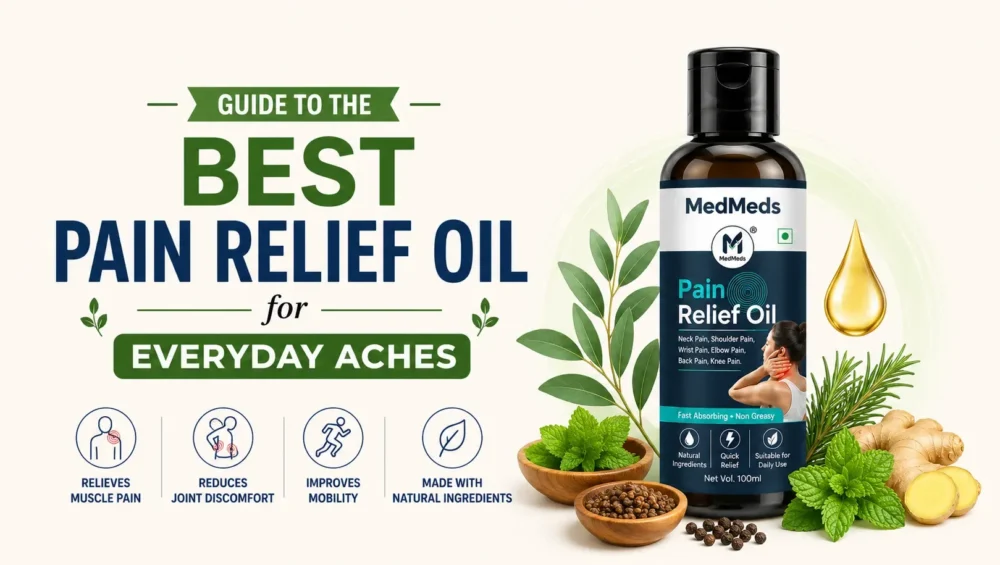
Guide to the Best pain relief oil for Everyday Aches

Dealing with body aches that come with daily routine can be very tiring and often determines how much you will be able to do during the day. To have a solution that will allow you to live a healthy and happy life, you have to find a natural way of doing so. It does not take much time to apply a good Pain Relief Oil on your skin and get rid of the root of your aches. Using a good product like this is effective because it soothes your pains and relaxes you without any sticky or greasy sensation.

How to Choose the Right Joint Pain Oil

When one grows older, or when one is overworked during activities that put a strain on them, the joints always feel the most strain, hence causing irritating stiffness and inflammation. There needs to be an active and direct way to address the situation in order for one to continue being flexible and active. When one applies a specially designed Joint Pain Oil on the stiff and immobile parts, flexibility becomes easier as the oil eases out the harsh friction felt between the joints. The oil goes a step further to nourish the body parts for easy engagement in hobbies.

Natural Ingredients to Look for Pain Oil

  • Wintergreen Oil for Deep Relief : Made from the leaves of the wintergreen plant, wintergreen oil is the perfect solution that Mother Nature offers for extreme body pains. It is made of a highly concentrated amount of natural methyl salicylate, which is similar to the topical aspirin. By rubbing it on the affected areas of your skin, it will be absorbed into your tissues and prevent pain sensations, hence becoming an integral component of a high-quality Pain Relief Oil.

  • Eucalyptus Oil to Combat Inflammation : It is great in stimulating blood flow to parts that have become stiff due to swelling. Using it will detoxify such places from excess fluids that may be clogging them, hence helping relieve muscle stiffness to restore the feeling of agility.

  • Camphor for Instant Numbing and Warmth : Camphor provides an exceptional double effect when applied externally. The first reaction is that it gives you a cold sensation which will immediately take away your mind from the sharp pain. This is soon replaced by a feeling of warmth spreading from where the camphor was applied. The two sensations make this  Pain Oil a perfect option for instant pain killer , especially when the muscles or the nerves are overly sensitive.

  • Mint Extract to Relax Tight Muscle Spasms : Mint extract is extracted from pure mint and works instantly to bring refreshment to tired body parts. The extract functions as a counter irritant, which basically means that it produces a cool distraction that greatly reduces the feeling of deeper aches. Mint extract works effectively in controlling sudden muscle spasms and cooling off overheated joints, thus making any common Pain Killer Oil more refreshing than usual.

Why Your Nightly Routine Needs a Reliable Knee Pain Oil

Your knees are fantastic in that they hold the whole body weight of yours on them on a daily basis, making them more prone than ever to wearing out and causing pain. No matter whether you hurt yourself during jogging, walking too far, or even doing some housework, what you feel is completely genuine. The use of a relaxing Knee Pain Oil for those nights when you have nothing else to do but sleep will actually help you recover well while in bed.

Best Pain Relief Oil for Knee Pain

A Safe, Fast Alternative: The pain killer oil You Can Always Trust

The repeated consumption of oral medicines as a way of handling occasional aches can also lead to several side effects that make topical treatment methods highly favored due to their benefits. During occasions when there is an acute attack, it becomes highly necessary to get immediate treatment that does not harm your general well-being in any way. By grabbing yourself a highly effective Pain Killer Oil, it guarantees you instant pain relief through an area in which your body feels excruciatingly painful. It offers you effective pain relief without having to go through your digestive tract in any way.

How to Apply Pain Relief Oil for Maximum Benefits

In addition, the proper application method of your topical solution can play an equally important role in its effectiveness. Here are several easy yet very efficient measures that will ensure maximum benefits from your skincare program:

  • Skin Preparation : It should always be remembered that clean skin comes first. Wash the skin in the exact place where you are experiencing discomfort. The pores will assist in the rapid penetration of the organic substances into your body.

  • Liquid Warm-Up : Add several drops of the analgesic into your palm and rub it for several seconds. Thus, you will increase the temperature of the fluid making it softer for your skin.

  • Application and Massage : Apply the warmed-up substance onto your painful muscles or joints, perform circular movements under some pressure. But avoid excessive pressure in case of tender parts of the body.
  • Wrap Your Body Cover yourself with a warm rag or wear comfortable clothing.

Conclusion

Living with constant discomfort shouldn’t be a kind of everyday thing. Either you are stuck with rough post-workout soreness, the slow, natural wear and tear of your joints, or just the physical strain from a hectic life, finding the right natural approach can really change everything. When you gently add a targeted body massage oil to what you do every day, you’re not only covering up that lingering ache for a bit, you’re also feeding your muscles, supporting your range of motion, and taking care of your long-term physical balance.

You don’t have to let stiffness, or even a little swelling, stop you from doing the activities you actually love. Spend a few minutes to pick the particular Knee Pain Oil that fits your body’s needs in a very personal way. If you set aside just a short moment each day for a calming self-care massage, your body can recover more naturally, and in a steady kind of manner—so you can move forward with more energy , more movement, and a life that feels lighter, almost completely without pain.

safety and precautions to use pain relief oil

Safety Precautions and Professional Tips

Never Use on Damaged Skin: Do not use your pain oil on any injured, open, or damaged skin. The ingredients in it are concentrated in nature and intended for use on healthy skin only, and using them on injured skin is bound to create a severe burning sensation.

  • Keep Away From Eyes : Make sure that you keep the preparation well away from your eyes and mouth. If you happen to apply it on these parts of your body, clean them by washing them under cold water.

  • Wash Your Hands : It is essential that after each massage session, you clean your hands using a soap solution to prevent accidental transfer of the preparation to other parts of your body.

FAQ’S

To get the best results, apply it two to three times each day. Using it in the morning , helps your joints and muscles become more workable, like they’re finally untangled. Then if you massage the area before bed, it can support a better rest and overall recovery during sleep.

Yes, that’s pretty common. Usually it means your body is reacting well to the product. The oil should bring both cooling and warming effects, so you get distracted from the pain while blood flow increases.

That reduces rubbing within the joints, so your movement becomes smoother and your range of motion improves

Best Pain Relief Oil for Knee Pain: A Complete Guide to Natural Comfort and Joint Care

Best Pain Relief Oil for Knee Pain: A Complete Guide to Natural Comfort and Joint Care

Knee pain is one of the most common joint complaints among adults of all ages. Whether it develops due to ageing, physical activity, prolonged standing, sports injuries, or everyday wear and tear, knee discomfort can make simple activities like walking, climbing stairs, or exercising more difficult.

Many people choose a best pain relief oil for knee pain as part of their self-care routine because massage combined with topical oils may provide temporary soothing relief from minor muscle and joint discomfort. While these oils do not cure the underlying cause of knee pain, they may help improve comfort when used alongside healthy lifestyle habits and appropriate medical care when needed.

This guide explains how knee pain relief oil works, the ingredients commonly used, potential benefits, and tips for choosing the right product.

Understanding Knee Pain

The knee is one of the body’s largest and most frequently used joints. It supports body weight and plays an essential role in walking, running, sitting, standing, and climbing stairs.

Because the knee is under constant stress, it is more vulnerable to discomfort caused by overuse, injuries, muscle strain, or age-related joint changes.

Mild knee pain may improve with rest, gentle movement, and self-care. However, persistent or severe pain should always be evaluated by a qualified healthcare professional.
Common Causes of Knee Pain

Several factors can contribute to knee discomfort, including:

Age-Related Joint Changes

As people age, the cushioning inside the knee may naturally wear down, leading to stiffness and reduced flexibility.

Physical Activity

Sports, running, heavy lifting, and repetitive movements can place additional stress on the knee joint.

Muscle Strain

Overworked muscles around the knee may contribute to temporary discomfort and reduced mobility.

Excess Body Weight

Carrying extra body weight increases pressure on the knees during everyday movement.

Previous Injuries

Past ligament, tendon, or cartilage injuries may increase the likelihood of recurring knee discomfort.

Understanding the possible cause of knee pain helps determine the most appropriate approach to care.

How Does Pain Relief Oil Work?

A joint pain relief oil is designed for external use and is gently massaged into the affected area.

Massage itself may help improve local circulation and relax surrounding muscles. Depending on the formulation, a pain relief massage oil may also create a warming or cooling sensation that provides temporary comfort.

Many people include an oil for knee joint pain as part of their daily self-care routine along with stretching, regular exercise, maintaining a healthy body weight, and following medical advice when necessary.

Key Ingredients to Look for in a Quality Pain Relief Oil

Different products use different herbal or natural ingredients. While formulations vary, many herbal pain relief oil products may include ingredients traditionally used in wellness practices.

Herbal Extracts

Plant-based ingredients have long been used in traditional massage therapies to support comfort and relaxation.

Essential Oils

Natural essential oils are commonly included for their soothing aroma and cooling or warming effects during massage.

Natural Carrier Oils

Carrier oils help spread the product evenly over the skin and support smooth massage application.

Botanical Ingredients

Some formulations include botanical extracts traditionally used to support muscle and joint comfort as part of topical wellness products.

Always read the ingredient label before use, especially if you have allergies or sensitive skin.

Benefits of Using the Best Pain Relief Oil for Knee Pain

Benefits of Using the Best Pain Relief Oil for Knee Pain

1. Provides Temporary Comfort

A quality best pain relief oil for knee pain may help provide temporary relief from minor muscle and joint discomfort when used as directed.

2. Supports Relaxing Massage

Massage with oil for joint pain may help relax surrounding muscles and reduce feelings of stiffness after daily activity.

3. Easy to Apply

Unlike some other topical products, pain relief massage oil can be applied directly to the affected area with a gentle massage.

4. Complements an Active Lifestyle

Using knee pain relief oil alongside stretching, strengthening exercises, and healthy weight management may support overall joint comfort.

5. Suitable for Daily Self-Care

Many people include natural pain relief oil as part of their daily wellness routine to help maintain comfort after work, exercise, or prolonged standing.

Who Can Use Pain Relief Oil for Knee Pain?

A knee pain relief oil is generally intended for adults experiencing minor muscle or joint discomfort as part of their daily routine. It is commonly used by:

  • Adults with occasional knee discomfort after physical activity.
  • Individuals who stand or walk for long hours.
  • Fitness enthusiasts and recreational athletes.
  • Older adults looking for temporary comfort through massage.
  • People who prefer an herbal pain relief oil or other topical wellness products.

Pain relief oils are designed to complement healthy lifestyle habits and should not replace professional medical evaluation for persistent or severe knee pain.

How to Apply Knee Pain Relief Oil Correctly

Using the oil properly can help you get the most benefit from a gentle massage.

Step 1: Clean the Area

Wash and dry the affected knee before applying the oil.

Step 2: Apply a Small Amount

Pour a few drops of oil for knee joint pain into your palm.

Step 3: Massage Gently

Massage the oil into the knee using slow circular motions for 5–10 minutes or according to the product instructions.

Step 4: Allow It to Absorb

Let the oil absorb into the skin before covering the area with clothing.

Step 5: Wash Your Hands

Wash your hands after application unless the hands are the treatment area.

Always follow the manufacturer’s directions for frequency of use.

Healthy Lifestyle Tips to Support Knee Health

A best pain relief oil for knee pain works best when combined with healthy habits that support joint function.

Maintain a Healthy Weight

Excess body weight places additional pressure on the knee joints. Maintaining a healthy weight may help reduce everyday stress on the knees.

Stay Physically Active

Low-impact activities such as walking, cycling, swimming, and stretching may help support joint flexibility and muscle strength.

Strengthen Supporting Muscles

Strong thigh and leg muscles help support the knee joint and improve overall stability.

Wear Supportive Footwear

Comfortable shoes with proper support may reduce unnecessary stress on the knees during walking or standing.

Eat a Balanced Diet

A nutritious diet rich in fruits, vegetables, whole grains, lean protein, and healthy fats supports overall musculoskeletal health.

Precautions Before Using Pain Relief Oil

Precautions Before Using Pain Relief Oil

Before using any joint pain relief oil, keep these precautions in mind:

  • Read the product label carefully.
    • Perform a patch test before first use.
  • Do not apply to broken, irritated, or infected skin.
  • Avoid contact with the eyes and mouth.
  • Wash hands after application.
  • Keep out of the reach of children.
  • Store in a cool, dry place away from direct sunlight.
  • If you are pregnant, breastfeeding, or have a medical condition, seek advice from a qualified healthcare professional before use.

Possible Side Effects

Most topical oils are well tolerated when used as directed. However, individual reactions may vary depending on skin sensitivity and the ingredients used.

Possible side effects include:

  • Mild skin irritation
  • Temporary redness
  • Itching
  • Allergic reaction in sensitive individuals

Stop using the product if irritation continues or worsens, and seek medical advice if needed.

Pain Relief Oil at a Glance

FeatureDetails
Product TypeTopical pain relief massage oil
Main PurposeTemporary relief from minor muscle and joint discomfort
Suitable ForHealthy adults (follow label instructions)
ApplicationExternal use only
Best Used WithExercise, weight management, stretching, and healthy lifestyle habits
Daily UseAs directed on the product label

When Should You See a Doctor?

While a best pain relief oil for knee pain may provide temporary comfort for minor aches, medical evaluation is important if you experience:

  • Severe or sudden knee pain
  • Swelling that does not improve
  • Difficulty walking or bearing weight
  • A knee injury with deformity
  • Fever along with knee swelling
  • Pain lasting for several weeks despite self-care

Conclusion

Knee pain can affect everyday activities, making simple tasks such as walking, climbing stairs, or exercising more challenging. While maintaining a healthy weight, staying physically active, and strengthening the muscles around the knee are essential for long-term joint health, many people also include a best pain relief oil for knee pain in their daily wellness routine.

A quality joint pain relief oil may provide temporary comfort through gentle massage and can complement other healthy lifestyle habits. Choosing a trusted product, following the recommended directions, and using it consistently may help support overall joint comfort.

Remember that persistent, severe, or worsening knee pain should always be evaluated by a qualified healthcare professional to identify and treat the underlying cause.

As emphasized by the National Institutes of Health (NIH), reliable health information should complement—not replace—the advice and care provided by qualified healthcare professionals. Always read and follow the product label instructions, discontinue use if irritation or an allergic reaction occurs, and seek medical advice if symptoms persist or worsen.

 Frequently Asked Questions 

The best pain relief oil for knee pain depends on your individual needs, the ingredients used, and the quality of the product. Choose an oil from a trusted manufacturer and always follow the instructions on the label.

No. A knee pain relief oil may help provide temporary comfort from minor muscle and joint discomfort. It does not treat or cure the underlying cause of knee pain.

Use the oil according to the manufacturer’s directions. Most topical oils are applied with a gentle massage one or more times daily, depending on the product instructions.

Some people apply pain relief massage oil before or after physical activity as part of their self-care routine. Always use it as directed on the product label.

Many herbal pain relief oil products are designed for regular external use. However, always perform a patch test before first use and discontinue use if skin irritation develops.

No. Oil for joint pain may help provide temporary comfort, but it is not a cure for arthritis or other medical conditions. If you have persistent joint pain, consult a qualified healthcare professional.
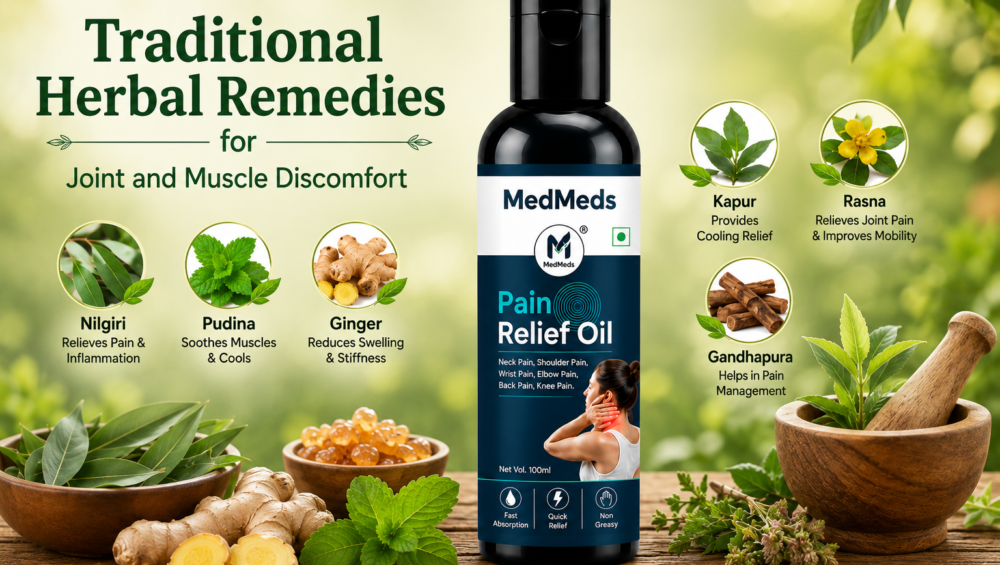
Most people tolerate topical pain relief oils well when used correctly. However, some individuals may experience mild skin irritation, redness, itching, or an allergic reaction depending on their skin sensitivity.

Many older adults use oil for knee joint pain as part of their daily self-care routine. However, anyone with ongoing pain, severe swelling, or other medical conditions should seek professional medical advice.

Store the bottle in a cool, dry place away from direct sunlight. Keep the cap tightly closed and keep it out of the reach of children.

Seek medical advice if your knee pain is severe, follows a major injury, is accompanied by significant swelling, prevents you from walking, or does not improve after several days of self-care.

Medical Disclaimer

 This article is intended for educational and informational purposes only. It should not be considered medical advice, diagnosis, or treatment. Pain relief oils are designed for external use and may help provide temporary comfort but are not a substitute for professional healthcare. If you have severe pain, swelling, an injury, or an underlying medical condition, consult a qualified healthcare professional before using any topical product.

About the Author

MedMeds Editorial Team

The MedMeds Editorial Team creates evidence-based health and wellness content designed to help readers make informed decisions about self-care products. Every article is carefully reviewed to ensure accuracy, readability, and responsible health information while encouraging healthy lifestyle habits and appropriate medical guidance.

Natural Joint Support tablet

Natural Joint Support Formula for Mobility, Flexibility & Comfort

Healthy joints are kind of essential for keeping an active, comfy independent lifestyle. You know, every movement we do , like walking, climbing stairs, working out, stretching, or even just dealing with daily chores, really leans on joints working smoothly, almost as if they are supposed to. Then later, as we age and our everyday routines start to shift a bit, looking after our joints becomes even more important for long term wellness, and staying mobile.

A lot of folks who are searching for the Best Joint Pain Tablet end up going after something that feels like real Joint Health Support , also reliable Mobility and Flexibility Support , and a few practical ways to keep healthy movement running through their day to day life. Still, even if healthy lifestyle habits are the base of overall wellness, nutritional support can also play a meaningful part in keeping your joints in decent shape, in a way that just makes sense over time.

Why Joint Health Matters

Joints are these structures that connect bones and, help the body move freely, pretty much all the time.When joints stay healthy they support flexibility, balance, coordination, and even overall physical performance. Whether you’re working, exercising, traveling, or just dealing with everyday routines , having healthy joints makes your movement feel easier and more efficient.

Caring for your joints isn’t just for older adults or people who feel “past it” . People of every age can gain from giving attention to Joint health, and keeping up with good steady movement routines. When you start thinking about joint wellness early, it might help protect mobility and your range of movement. And later on, if you stay active, you can still enjoy a better quality of life, really. 

Understanding Joint Health Support

Joints are basically the structures that hook up bones and let the body move, kind of freely. When Joints are in good shape they matter a lot for flexibility, balance coordination, and also for overall physical performance.Whether you are working, exercising , traveling, or just handling everyday things, healthy joints help you get around in a more comfortable, and actually more efficient way too.  

Looking after your joints isn’t only for older adults, not really . People of all ages can still benefit from maintaining Healthy Joints, and also from picking up small, steady habits that build toward long-term wellness. If you get serious about joint care earlier on , it may help support your mobility, your flexibility, and your overall physical well-being. Staying focused on healthy motion, along with an active lifestyle, can help people keep Healthy Joints working well, and keep that freedom of movement going for years ahead . 

The Importance of Mobility and Flexibility Support

Mobility is about the body’s ability to move in a smooth way through a full range of motion, while flexibility mostly relates to how easily muscle and connective tissues can stretch, comfortably . When you Get Proper Mobility and Flexibility Support it can help keep healthy movement going, back up physical performance, improve balance plus coordination, and support long term joint wellness. Keeping mobility and flexibility intact is a big part, of overall well being, and honestly it also fits pretty nicely with an active lifestyle, even when life gets busy , and you are not sure where the time went. Keeping mobility and flexibility intact is a big piece of overall well being, and it works well with staying in motion .

Common Factors That Can Affect Joint Wellness

Several factors can mess with joint pain tablet and movement over time, and it kind of build up slowly.

  • Aging – As part of natural aging process, keeping mobility and flexibility becomes more and more important, honestly. Supporting healthy movement can help people stay active and independent for longer. Even small things, like better range of motion, they really matter over time and can help the body stay more responsive.
  • Physical Inactivity – Long periods of sitting , and limited physical activity can mess with flexibility and the overall movement patterns. Regular exercise helps with keeping healthy joints and mobility going, it kinda supports it in a steady way.
  • Repetitive Movements – Certain occupations, and everyday routines that keep going back in the same way can put extra stress on particular joints. You know, those repetitive movements they do all day, can make the load build up more than it should, on certain areas.
  • Excess Body Weight – Keeping a healthy body weight, can help with comfortable movement and also ease the burden on weight-bearing joints, which i think can reduce stress overall.
  • Lifestyle Habits – Nutrition hydration, sleep quality, and regular exercise all kind of work together for overall wellness, plus healthy movement. And then there’s hydration too, it matters more than people think, like actually. When sleep gets better, movement tends to follow, in a kind of calm way, sort of. Regular exercise helps, yes but consistent routines, not just random bursts.
  • Stay Physically Active – Regular movement is one of the more effective ways to support healthy joints , honestly. Things like walking, stretching, yoga , cycling, swimming , and low-impact exercises can really help keep mobility and flexibility on track.

best tablet to support joints

Follow a Balanced Diet

A nutrient rich diet gives essential nutrients that sort of support overall well being, and not just in a broad sense. If you start adding fruits and vegetables, whole grains and healthy fats, together with high quality protein sources, you tend to end up with a more balanced routine, even if it feels kinda messy at first. It s like the body gets the right building blocks, so your day to day wellness can feel steadier and stronger.

Ages 18–30Ages 30–50Ages 50+
Active lifestyle, sports, and fitness activities, you know, the whole thing Start building healthy movement habits early on, kind of naturally Help sustain long term mobility and flexibility too.After long sitting hours and all that busy, work schedules. try to keep some flexibility and mobility in the mix, not just when you remember. and then focus on daily joint wellness, like a small habit that stays with you, even if the day gets a bit messy.Put more weight on moving around and staying independent, day to day Back active living, with a certain lightness of motion too Keep long term care for the joints wellness, so it lasts.

The Role of Joint Wellness Supplements

Complement a healthy lifestyle, habits and keep it kind of steady, day by day. Provide extra nutritional support when you need it, not just in theory. Support Joint Health and those Joint Health goals in particular, also help with mobility and flexibility support, you know, the whole move-easier side. Work best alongside exercise, hydration, and balanced nutrition, so nothing gets left behind.

Conclusion

Healthy joints help you stay active, you know, not just in a gym way. Joint Health Support kind of helps maintain day to day movement, even when life gets busy. Mobility and flexibility support also plays into long term wellness, it matters more than people think, honestly. Keeping joints in good shape really comes down to healthy habits, solid nutrition, and regular movement, like really daily kind of thing. Also, when you’re picking supplements , you want them to fit into a balanced and active routine for steady assistance , not just something random that you grabbed.

Shopping cart close