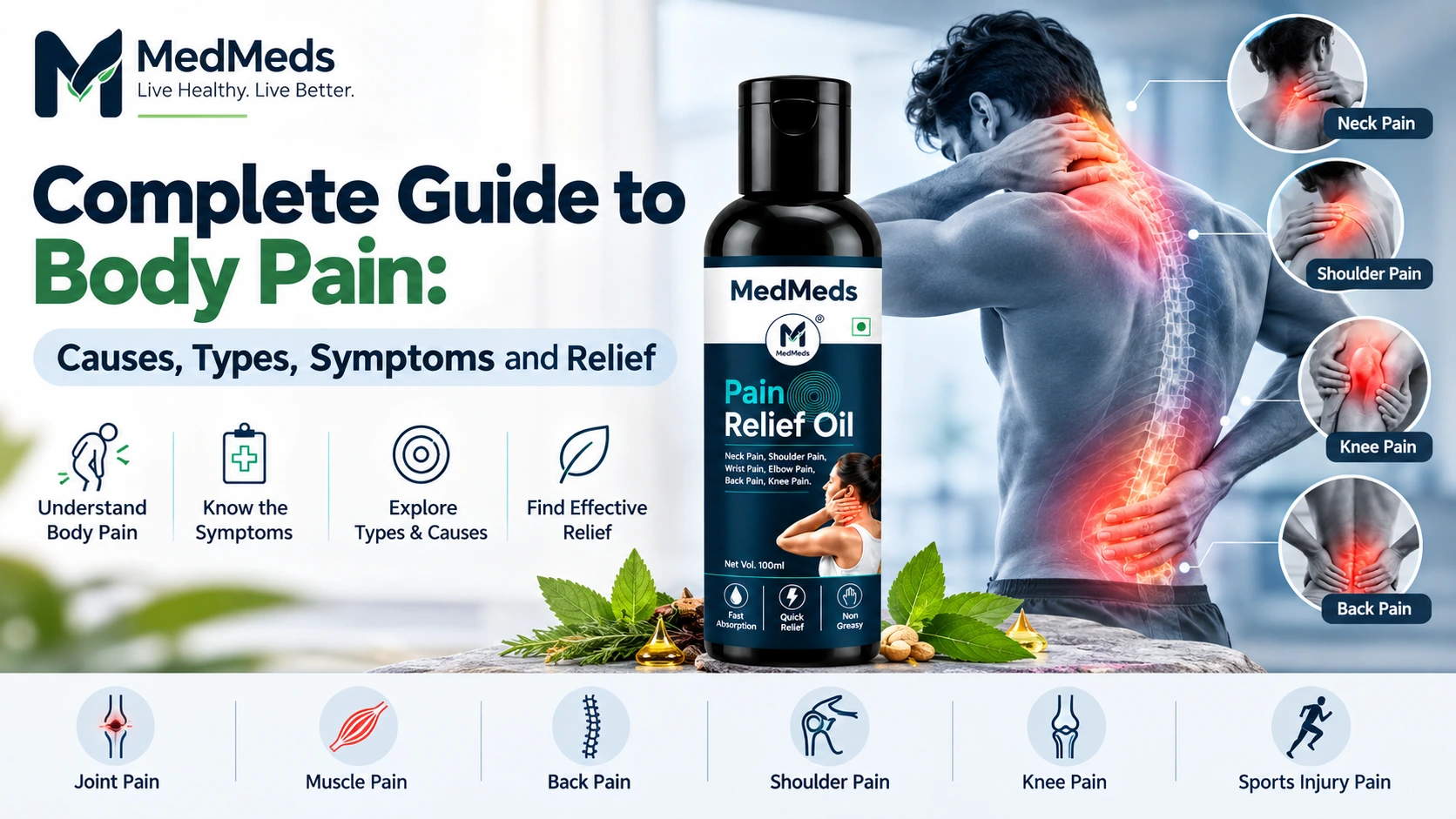
Complete Guide to Body Pain and Its Common Causes
Body pain is a common health concern that can affect people of different age groups. It may develop after physical activity, long working hours, poor posture, muscle strain or other health conditions. Sometimes the discomfort affects one particular area, while in other cases, people may experience pain in several parts of the body. Choosing suitable self-care methods, including an appropriate pain oil for massage, may help support everyday comfort.
Understanding the causes of body pain is important because the right approach to care depends on what is causing the discomfort. Some types of muscle soreness improve with rest and simple home-care measures, while persistent or unexplained pain may require medical attention.
In this guide, we will explore the common types of body pain, their possible causes, associated symptoms, prevention methods and different ways to manage everyday muscle and joint discomfort.
What Is Body Pain?
Body pain refers to discomfort, soreness or aching in different parts of the body. It can affect muscles, joints, bones, ligaments and surrounding soft tissues.
The intensity of pain can vary from mild discomfort to severe pain that makes everyday activities difficult. Some people experience pain after exercise or physical work, while others may notice discomfort after sitting in the same position for several hours.
Body pain can generally be classified into two categories:
-
Acute Pain: This type of pain develops suddenly and is usually associated with an injury, muscle strain or temporary health problem.
-
Chronic Pain: Chronic pain continues for a longer period and may be associated with ongoing medical conditions. It may require proper medical evaluation and long-term management.
What Are the Common Types of Body Pain?
Body pain can affect different areas depending on the underlying cause. Some common types include:
A. Muscle Pain
Muscle pain refers to soreness, tenderness or discomfort in the muscles. It commonly occurs after intense exercise, repetitive movements or physical work.
People may experience muscle pain in their arms, legs, shoulders, back or other muscle groups. Some people also explore an best joint pain relief oil in India as part of their regular massage routine for temporary relaxation and comfort.
Common contributing factors include:
- Excessive physical activity
- Muscle strain
- Poor exercise technique
- Insufficient recovery
- Muscle tension
B. Joint Pain
Joint pain affects the areas where two or more bones meet. It can occur in the knees, shoulders, hips, wrists, ankles and fingers.
Some common causes include injuries, overuse, arthritis and inflammation around the joints. People searching for joint pain oil should understand that massage products may support comfort but do not treat underlying joint diseases.
Joint pain may be accompanied by swelling, stiffness, tenderness or difficulty moving the affected joint. People looking for the best joint pain relief oil in India should consider ingredients, product quality, skin compatibility and intended use before choosing a massage product.
C. Knee Pain
Knee pain is a common problem that can affect walking, climbing stairs, running and other daily activities.
Possible causes include:
- Sports injuries
- Excessive pressure on the knee
- Muscle weakness
- Overuse
- Osteoarthritis
- Ligament or tendon injuries
A stiff knee joint may also make it difficult to bend or straighten the leg comfortably. When exploring knee pain oil or the best oil for knee joint pain, it is important to understand that topical massage products are not a substitute for proper medical evaluation.
D. Back Pain
Back pain can affect the upper, middle or lower back. It may develop because of muscle strain, prolonged sitting, lifting heavy objects or certain spinal conditions.
Common symptoms include stiffness, soreness and discomfort during bending, standing or changing positions.
Some people include gentle massage in their self-care routine and look for oil for back pain massage to make the massage experience more comfortable.
E. Leg Pain
Leg pain can involve the thighs, calves, knees or feet. It may occur after walking, running, exercise or prolonged standing.
Muscle cramps, injuries, nerve-related conditions and circulation problems can also contribute to leg discomfort. People considering oil for leg pain should first understand the possible cause, particularly if the pain is persistent, severe or associated with swelling.
F. Shoulder and Neck Pain
Shoulder and neck discomfort may develop because of muscle tension, poor posture, repetitive movements or injuries.
People who work at computers or spend long hours looking down at mobile devices may experience stiffness and discomfort in these areas.
What Are the Common Causes of Body Pain?
There is no single reason behind all types of body pain. Different lifestyle habits, physical activities and medical conditions can contribute to discomfort.
Here are some common causes:
1. Muscle Strain and Overuse
Muscle strain occurs when muscle fibres are stretched or injured. It may happen during exercise, lifting heavy objects or performing repetitive physical activities.
Using a muscle beyond its usual capacity can also cause soreness and tenderness.
2. Poor Sitting and Sleeping Posture
Maintaining an uncomfortable position for extended periods may put additional pressure on certain muscles and joints.
Poor posture while sitting, working or sleeping can contribute to neck, shoulder and back discomfort.
3. Lack of Physical Activity
A sedentary lifestyle can contribute to reduced flexibility and muscle conditioning.
People who remain inactive for long periods may experience stiffness when they start moving or performing physical activities.
4. Excessive Exercise
Exercise supports physical fitness, but increasing workout intensity too quickly can cause muscle soreness and strain.
Insufficient recovery between workouts may also increase discomfort.
5. Physical Injuries
Falls, accidents, sports injuries and sudden movements can damage muscles, ligaments or joints.
Depending on the severity, an injury may cause pain, swelling, bruising or restricted movement.
6. Stress and Lack of Sleep
Stress can contribute to muscle tension, particularly around the neck, shoulders and back.
Insufficient sleep may also affect the body's recovery process and make existing discomfort more difficult to manage.
7. Dehydration
Inadequate fluid intake, particularly during exercise or hot weather, can contribute to dehydration and may increase the likelihood of muscle cramps.
8. Age-Related Changes
As people grow older, changes in muscles, bones and joints may affect flexibility and mobility.
Some people may experience joint stiffness or discomfort associated with age-related conditions.
9. Infections
Certain viral infections, including influenza, can cause widespread muscle aches, fatigue and general body discomfort.
Underlying Medical Conditions
Some medical conditions, such as arthritis, fibromyalgia and inflammatory disorders, may cause recurring or persistent body pain.
If pain occurs frequently or without an obvious reason, professional medical evaluation is important.
Common Symptoms Associated With Body Pain
The symptoms of body pain depend on its cause and the body area affected.
Common symptoms include:
- Muscle soreness or tenderness
- Joint stiffness
- Swelling around an affected area
- Difficulty moving certain body parts
- Muscle cramps
- Pain during physical activity
- Reduced flexibility
- General weakness or tiredness
Not everyone experiences the same symptoms. Persistent or worsening symptoms should not be ignored.
How Does Body Pain Affect Daily Life?
Body discomfort can interfere with normal routines and physical activities.
Some common effects include:
Difficulty Walking: Knee, leg or foot discomfort may make walking and climbing stairs uncomfortable.
Reduced Exercise Performance: Muscle soreness and joint stiffness may affect workout routines and sports activities.
Sleep Disturbances: Discomfort may make it difficult to find a comfortable sleeping position.
Reduced Work Productivity: People who perform repetitive tasks or sit for long hours may find it difficult to concentrate when experiencing pain.
Limited Mobility: Persistent joint or muscle problems may affect flexibility and everyday movement.
Identifying the underlying cause can help people choose suitable care and activity adjustments.
Natural Ways to Manage Body Pain
Several everyday habits may help manage certain types of mild muscle and joint discomfort.
However, these methods are not suitable for every cause of pain.
A. Take Appropriate Rest
Give the affected muscles enough time to recover after strenuous activity. Avoid repeating movements that increase discomfort.
However, prolonged complete inactivity is not appropriate for every condition. Follow medical advice about returning to normal movement.
B. Try Gentle Stretching
Gentle stretching may help maintain flexibility and reduce stiffness.
Avoid stretching movements that cause sharp pain or worsen an existing injury.
C. Maintain Proper Hydration
Drink enough water throughout the day, especially during exercise or hot weather.
Adequate fluid intake supports normal muscle function.
D. Use Warm or Cold Compresses
Cold packs wrapped in a towel may help with pain and swelling after certain recent minor injuries.
Warm compresses may feel soothing for muscle tightness and stiffness.
Avoid applying extreme temperatures directly to the skin.
E. Maintain a Balanced Diet
A balanced diet containing protein, vegetables, fruits, whole grains and essential nutrients supports general health and normal muscle function.
F. Improve Sleeping Habits
Getting sufficient sleep and maintaining a comfortable sleeping position may support physical recovery.
G. Stay Physically Active
Regular activities such as walking, swimming and gentle exercise may help maintain muscle strength and flexibility.
Choose activities according to your fitness level and medical condition.
Role of Massage in Body Pain Management
Massage is a commonly used method for relaxation and muscle care. It involves applying pressure or gentle movements to muscles and surrounding soft tissues.
Some people find massage helpful for temporary muscle relaxation and soreness. A suitable body pain relief oil may be used during massage to make the experience more comfortable.
Potential benefits may include:
- Promoting relaxation
- Reducing feelings of muscle tension
- Supporting comfort after physical activity
- Helping people relax after a long working day
- Providing a soothing self-care experience
How Does Massage Oil Help?
Massage oils are commonly used to reduce friction between the hands and skin during massage.
An appropriate massage product may make massage more comfortable and help the hands move smoothly over the skin. Some people search for pain cure oil or pain killer oil when looking for topical massage products, but these terms should not be understood as guarantees of pain relief or a cure.
Some people prefer herbal massage products, while others choose products based on their ingredients, fragrance and skin compatibility. It is important to understand that massage oil does not treat every underlying cause of muscle or joint pain.How to Choose the Right Massage Oil?
Selecting a suitable massage oil requires attention to ingredients, product quality and individual skin needs. People searching online for the best pain relief oil or the best pain relief oil in India should evaluate products carefully instead of relying only on promotional claims.
Here are some factors to consider:
Check the Ingredients
Read the ingredient list to understand what the product contains. Avoid ingredients that have previously caused skin irritation or allergic reactions.
Consider Skin Compatibility
People with sensitive skin should pay attention to fragrance and other ingredients that may cause irritation.
Follow Product Instructions
Always read the label for directions, precautions and recommended application methods.
Check Product Quality
Choose products with clear manufacturer details, ingredient information, batch details and appropriate labelling.
Understand the Intended Use
Different massage products may be designed for different purposes. Select a product according to its stated use rather than assuming that every oil is suitable for all types of discomfort.
For example, people exploring an oil for muscle pain should check its ingredients and intended use before applying it.
Daily Habits to Help Prevent Body Pain
Although not all types of body pain can be prevented, certain habits may help reduce avoidable muscle strain and discomfort.
- Maintain a comfortable sitting posture.
- Take regular breaks during long working hours.
- Warm up before exercise.
- Increase workout intensity gradually.
- Avoid lifting heavy objects incorrectly.
- Stretch gently when appropriate.
- Maintain sufficient hydration.
- Follow a balanced diet.
- Get adequate sleep.
- Allow enough recovery time after strenuous exercise.
Small lifestyle improvements can support better movement and general physical well-being.
When Should You Consult a Doctor?
Not every type of body pain requires medical treatment, but certain symptoms need professional attention.
Consult a healthcare professional if:
- Pain lasts longer than expected or keeps returning.
- You experience severe or unexplained pain.
- An affected area becomes swollen, red or unusually warm.
- Joint pain makes normal movement difficult.
- Pain develops after an injury.
- You experience unexplained muscle weakness.
- Pain is accompanied by fever or other concerning symptoms.
Seek emergency medical help for sudden severe pain, chest pain, breathing difficulty, sudden weakness or inability to move a body part.
Do not depend only on massage oils or home remedies when medical evaluation is necessary.
Conclusion
Body pain can develop for several reasons, including muscle strain, injuries, poor posture, physical inactivity and underlying medical conditions. Understanding its causes, recognizing associated symptoms and following suitable daily care practices can help people make better decisions about their physical well-being.
Regular movement, adequate rest, hydration, balanced nutrition and proper exercise habits are important parts of maintaining healthy muscles and joints. Massage and suitable massage products may support relaxation and everyday body care, but they should not replace medical evaluation or treatment when needed.
The most important step is to understand the cause of discomfort and choose an appropriate approach rather than relying on a single solution.
Medical Disclaimer
This article is intended for general educational and informational purposes only. It does not provide medical advice, diagnosis or treatment recommendations. Individual symptoms and health conditions may vary. Consult a qualified healthcare professional for persistent, severe or unexplained pain. Always follow the instructions and precautions provided on topical product labels.